

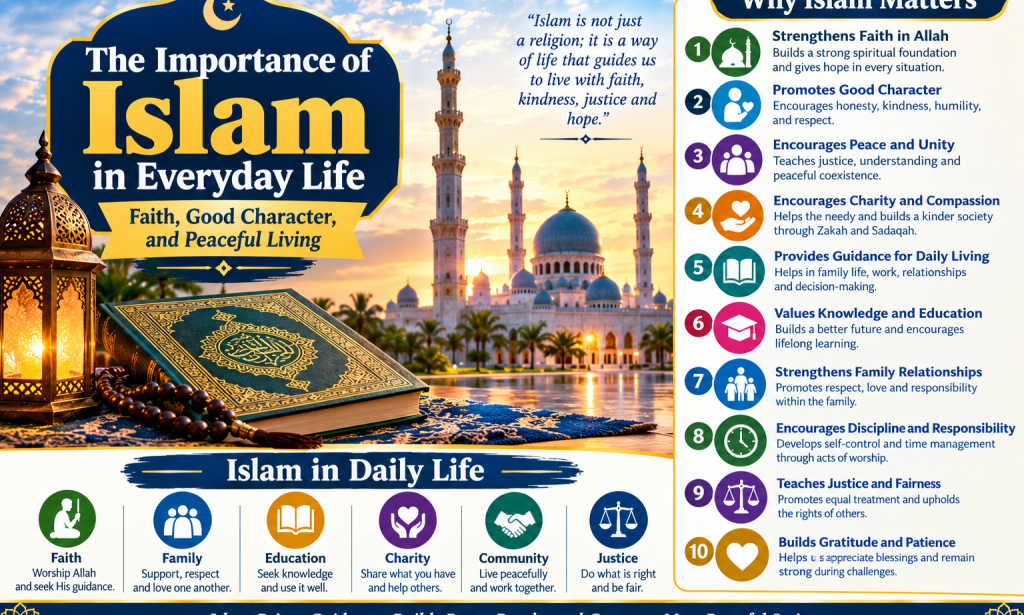
The Importance of Islam in Everyday Life: Faith, Good Character, and Peaceful Living
Introducti
Religion plays an important role in the lives of many people by providing spiritual guidance, moral values, and a sense of purpose. Islam, one of the world's major religions, guides Muslims in their relationship with Allah and their responsibilities toward other peopl
Islam is not limited to acts of worship. Its teachings also address honesty, kindness, justice, family relationships, education, charity, and peaceful coexistence. Understanding the importance of Islam helps readers appreciate how its principles influence the daily lives of Muslim
1. Islam Strengthens Faith in All
One of the most important aspects of Islam is its emphasis on belief in one God, Allah. Muslims are encouraged to remember Allah, pray regularly, read the Qur'an, and reflect on His guidanc
This relationship with Allah gives believers a spiritual foundation for facing life's challenges. Through worship and reflection, Muslims seek guidance, express gratitude, and develop patience during difficult circumstance
2. Islam Promotes Good Charact
Good character is an essential part of Islamic teaching. Muslims are encouraged to be truthful, humble, trustworthy, patient, and respectfu
Honesty helps build trust between people, while kindness strengthens relationships. Islam also discourages dishonesty, arrogance, injustice, and harmful behaviou
These values are important at home, in school, at work, and throughout society. A person who applies good moral principles can contribute positively to the lives of other
3. Islam Encourages Peace and Uni
Islam teaches Muslims to uphold justice, treat others fairly, and avoid unnecessary conflict. Peaceful relationships require patience, understanding, respectful communication, and a willingness to resolve disagreements constructivel
Muslims live in communities with people from different religions, ethnic groups, and cultural backgrounds. Respect and cooperation can help these communities live together peacefull
Unity does not require everyone to be identical; it involves recognizing shared responsibilities and treating people with dignit
4. Islam Encourages Charity and Compassi
Helping people in need is an important part of Islamic practice. Zakah, the obligatory giving of qualifying wealth by eligible Muslims, is one of the Five Pillars of Isla
Sadaqah, or voluntary charity, provides another way to help others. Charity may involve giving money, providing food, supporting education, or assisting someone facing difficultie
These practices encourage generosity and remind Muslims of their responsibilities toward vulnerable members of societ
5. Islam Gives Guidance for Daily Livi
Islam provides guidance on personal conduct, family responsibilities, business dealings, relationships, and community lif
Muslims are encouraged to keep their promises, fulfil their responsibilities, respect their parents, care for their neighbours, and deal honestly with other
Applying these principles can help individuals make thoughtful decisions and build relationships based on trust and mutual respec
6. Islam Values Knowledge and Educati
Seeking beneficial knowledge is highly valued in Islam. The Qur'an encourages reflection, learning, and the pursuit of understandin
Muslim students can apply these values by studying diligently, respecting their teachers, managing their time wisely, and using their knowledge responsibl
Educational organizations, including the Muslim Students' Society of Nigeria (MSSN), can help students combine religious learning with academic development through lectures, tutorials, seminars, and other educational activitie
Knowledge helps people understand their responsibilities and make meaningful contributions to societ
7. Islam Strengthens Family Relationshi
Family relationships are important in Islamic teaching. Muslims are encouraged to respect their parents, care for children, maintain family ties, and treat relatives with kindnes
Healthy family relationships depend on communication, patience, responsibility, and mutual respec
When family members support one another and fulfil their responsibilities, they can create a more caring and stable home environmen
8. Islam Encourages Discipline and Responsibili
Islam encourages regular prayer, fasting during Ramadan for those required and able to fast, and other acts of worship that develop disciplin
Observing religious obligations can help Muslims practise consistency, patience, time management, and self-contro
These qualities can also support academic achievement, responsible decision-making, and personal developmen
9. Islam Teaches Justice and Fairne
Justice is an important principle in Islam. Muslims are instructed to act fairly, respect the rights of others, fulfil agreements, and avoid oppressio
Fairness should extend beyond friendships and family relationships. It also matters in education, business, leadership, and community affair
When people act justly and take responsibility for their actions, they help build trust and strengthen societ
10. Islam Encourages Gratitude and Patien
Islam teaches believers to express gratitude for blessings and remain patient when facing difficultie
Gratitude encourages people to appreciate what they have and recognize the support they receive from others. Patience helps individuals respond thoughtfully rather than allowing frustration to control their decision
Together, these qualities can support emotional resilience, humility, and a more responsible approach to everyday challenge
Conclusi
Islam is important to Muslims because it provides spiritual guidance, encourages good character, promotes charity, and offers principles for personal and community lif
Its teachings emphasize faith in Allah, knowledge, justice, family responsibility, discipline, compassion, and peaceful coexistence. When Muslims sincerely apply these principles, they can strengthen their relationships and contribute positively to their communitie
Learning about Islam also creates opportunities for greater understanding between people of different backgrounds. Respect, knowledge, and good character remain valuable foundations for a peaceful and responsible societ
Message to the Reviewer: This article explores the importance of Islam in everyday life, focusing on faith, moral values, education, family relationships, charity, justice, discipline, and peaceful coexistence. It is written to inform readers about the practical relevance of Islamic teachings in personal development and society.The Importance of Islam in Everyday Life: Faith, Good Character, and Peaceful Livi
Introducti
Religion plays an important role in the lives of many people by providing spiritual guidance, moral values, and a sense of purpose. Islam, one of the world's major religions, guides Muslims in their relationship with Allah and their responsibilities toward other peopl
Islam is not limited to acts of worship. Its teachings also address honesty, kindness, justice, family relationships, education, charity, and peaceful coexistence. Understanding the importance of Islam helps readers appreciate how its principles influence the daily lives of Muslim
1. Islam Strengthens Faith in All
One of the most important aspects of Islam is its emphasis on belief in one God, Allah. Muslims are encouraged to remember Allah, pray regularly, read the Qur'an, and reflect on His guidanc
This relationship with Allah gives believers a spiritual foundation for facing life's challenges. Through worship and reflection, Muslims seek guidance, express gratitude, and develop patience during difficult circumstance
2. Islam Promotes Good Charact
Good character is an essential part of Islamic teaching. Muslims are encouraged to be truthful, humble, trustworthy, patient, and respectfu
Honesty helps build trust between people, while kindness strengthens relationships. Islam also discourages dishonesty, arrogance, injustice, and harmful behaviou
These values are important at home, in school, at work, and throughout society. A person who applies good moral principles can contribute positively to the lives of other
3. Islam Encourages Peace and Uni
Islam teaches Muslims to uphold justice, treat others fairly, and avoid unnecessary conflict. Peaceful relationships require patience, understanding, respectful communication, and a willingness to resolve disagreements constructivel
Muslims live in communities with people from different religions, ethnic groups, and cultural backgrounds. Respect and cooperation can help these communities live together peacefull
Unity does not require everyone to be identical; it involves recognizing shared responsibilities and treating people with dignit
4. Islam Encourages Charity and Compassi
Helping people in need is an important part of Islamic practice. Zakah, the obligatory giving of qualifying wealth by eligible Muslims, is one of the Five Pillars of Isla
Sadaqah, or voluntary charity, provides another way to help others. Charity may involve giving money, providing food, supporting education, or assisting someone facing difficultie
These practices encourage generosity and remind Muslims of their responsibilities toward vulnerable members of societ
5. Islam Gives Guidance for Daily Livi
Islam provides guidance on personal conduct, family responsibilities, business dealings, relationships, and community lif
Muslims are encouraged to keep their promises, fulfil their responsibilities, respect their parents, care for their neighbours, and deal honestly with other
Applying these principles can help individuals make thoughtful decisions and build relationships based on trust and mutual respec
6. Islam Values Knowledge and Educati
Seeking beneficial knowledge is highly valued in Islam. The Qur'an encourages reflection, learning, and the pursuit of understandin
Muslim students can apply these values by studying diligently, respecting their teachers, managing their time wisely, and using their knowledge responsibl
Educational organizations, including the Muslim Students' Society of Nigeria (MSSN), can help students combine religious learning with academic development through lectures, tutorials, seminars, and other educational activitie
Knowledge helps people understand their responsibilities and make meaningful contributions to societ
7. Islam Strengthens Family Relationshi
Family relationships are important in Islamic teaching. Muslims are encouraged to respect their parents, care for children, maintain family ties, and treat relatives with kindnes
Healthy family relationships depend on communication, patience, responsibility, and mutual respec
When family members support one another and fulfil their responsibilities, they can create a more caring and stable home environmen
8. Islam Encourages Discipline and Responsibili
Islam encourages regular prayer, fasting during Ramadan for those required and able to fast, and other acts of worship that develop disciplin
Observing religious obligations can help Muslims practise consistency, patience, time management, and self-contro
These qualities can also support academic achievement, responsible decision-making, and personal developmen
9. Islam Teaches Justice and Fairne
Justice is an important principle in Islam. Muslims are instructed to act fairly, respect the rights of others, fulfil agreements, and avoid oppressio
Fairness should extend beyond friendships and family relationships. It also matters in education, business, leadership, and community affair
When people act justly and take responsibility for their actions, they help build trust and strengthen societ
10. Islam Encourages Gratitude and Patien
Islam teaches believers to express gratitude for blessings and remain patient when facing difficultie
Gratitude encourages people to appreciate what they have and recognize the support they receive from others. Patience helps individuals respond thoughtfully rather than allowing frustration to control their decision
Together, these qualities can support emotional resilience, humility, and a more responsible approach to everyday challenge
Conclusi
Islam is important to Muslims because it provides spiritual guidance, encourages good character, promotes charity, and offers principles for personal and community lif
Its teachings emphasize faith in Allah, knowledge, justice, family responsibility, discipline, compassion, and peaceful coexistence. When Muslims sincerely apply these principles, they can strengthen their relationships and contribute positively to their communitie
Learning about Islam also creates opportunities for greater understanding between people of different backgrounds. Respect, knowledge, and good character remain valuable foundations for a peaceful and responsible societ
Message to the Reviewer: This article explores the importance of Islam in everyday life, focusing on faith, moral values, education, family relationships, charity, justice, discipline, and peaceful coexistence. It is written to inform readers about the practical relevance of Islamic teachings in personal development and society.


You must be logged in to post a comment.