

What Would Happen If Nobody Used Cash Anymore?
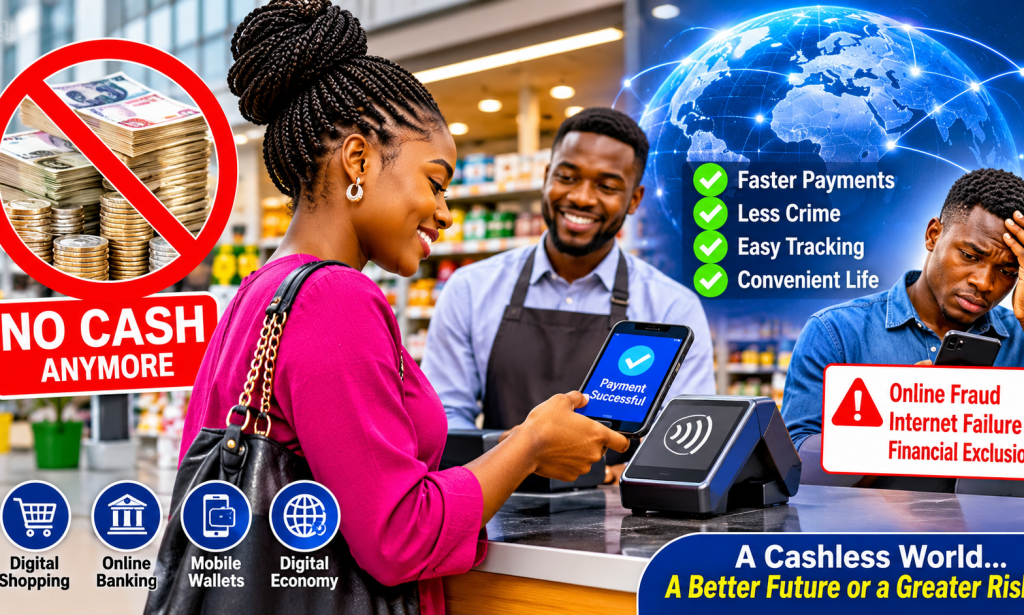
Imagine waking up one morning and discovering that physical money no longer exists. There are no paper notes, no coins and no cash machines. Every purchase, payment and financial transaction must be completed using a smartphone, bank card or digital wallet.
At first, this might sound like an exciting development. People would no longer need to carry cash around, and paying for goods could become much easier. However, a world without physical money would also introduce challenges that could affect millions of people.
Today, digital payments are becoming increasingly popular. From buying groceries to paying electricity bills, many people now depend on bank transfers, mobile applications and electronic payment systems.
But what would really happen if the entire world stopped using cash?
1. Shopping Would Become Completely Digital
In a cashless society, shopping would look very different.
Instead of bringing physical money to the market, customers would use smartphones, bank cards or other electronic payment methods.
Supermarkets, restaurants, shopping centres and even small businesses would need digital payment systems.
Buying everyday items could become faster because customers would not need to count notes or wait for change.
However, people would need access to reliable digital payment services to purchase even the smallest items.
2. Carrying Physical Money Would Become History
One major change would be the disappearance of wallets filled with paper money.
People would no longer need to visit cash machines regularly or worry about carrying large amounts of money.
Their funds would be stored in digital accounts, allowing them to make payments electronically.
This could reduce some risks associated with carrying cash, although digital accounts would still require strong security.
3. Small Businesses Would Need to Adapt
Small businesses would experience significant changes.
Market traders, roadside sellers, food vendors and shop owners would need ways to receive electronic payments.
Businesses that adapt could benefit from easier transaction records and improved financial management.
However, some small business owners might struggle with transaction charges, unreliable networks and the cost of digital payment equipment.
This could make operating a business more difficult for people who depend heavily on cash transactions.
4. People Without Smartphones Could Face Problems
Not everyone owns a smartphone or has access to banking services.
Some elderly people, rural residents and low-income individuals depend on physical cash for their everyday activities.
If cash disappeared completely, these people could find it difficult to buy food, pay for transportation or access essential services.
A cashless society would therefore need affordable and accessible payment alternatives to ensure that nobody is left behind.
5. Internet Failures Could Stop Payments
Imagine entering a supermarket to buy food, only to discover that the payment network is unavailable.
In a world that depends entirely on electronic transactions, internet problems, electricity failures and banking system interruptions could create serious difficulties.
Even people with enough money in their accounts might be unable to complete payments.
This is one reason reliable payment infrastructure would be essential in a completely cashless society.
6. Digital Fraud Could Become a Bigger Problem
As more people depend on electronic payments, criminals may look for new ways to steal money.
Fraudsters could use fake banking messages, fraudulent websites, stolen passwords and deceptive payment requests to access people's accounts.
People would need to become more careful about sharing personal and financial information.
Banks and financial institutions would also need stronger security systems to protect customers.
7. Governments Could Track Financial Transactions More Easily
One interesting effect of a cashless society is that most payments would leave electronic records.
These records could help financial institutions identify suspicious transactions and help governments improve tax collection.
Businesses could also find it easier to monitor their income and expenses.
However, this could raise concerns about privacy because people's financial activities would become easier to record and analyse.
Protecting personal financial information would become extremely important.
8. What Would Happen During Emergencies?
Physical cash can be useful when electricity or internet services are unavailable.
For example, imagine a natural disaster that damages communication networks. People might be unable to access banking applications or complete electronic payments.
In a completely cashless world, buying food, medicine or other essential items could become difficult during such emergencies.
Countries would need backup payment systems that could continue working when ordinary digital services fail.
9. Banks and Financial Technology Companies Would Become More Important
Without physical cash, banks and financial technology companies would play an even greater role in everyday life.
People would depend on these institutions to store money, process payments and protect financial information.
Payment applications and digital wallets could become essential tools for everyday activities.
This would also increase the importance of financial education because people would need to understand how to manage their money safely online.
10. Would a Cashless World Be Better Than the World We Have Today?
A completely cashless society could offer several benefits. Payments might become faster, financial records could become easier to manage, and people would have less need to carry physical money.
However, it could also create problems involving privacy, online fraud, technology failures and financial exclusion.
Not everyone has the same access to smartphones, electricity, internet services or banking facilities.
For this reason, moving towards a cashless society would require careful planning and strong protection for consumers.
Conclusion
A world without physical money would completely transform how people live, shop, work and conduct business.
Digital payments could make many financial activities more convenient, but depending entirely on technology could also introduce new risks.
Although the world is becoming increasingly digital, physical cash remains useful to millions of people.
The future of money may involve a combination of modern digital payment systems and traditional payment options.
**But here is a question worth thinking about: If physical cash disappeared tomorrow, would you feel comfortable depending on your smartphone or bank card for every single purchase you make?**










































You must be logged in to post a comment.