

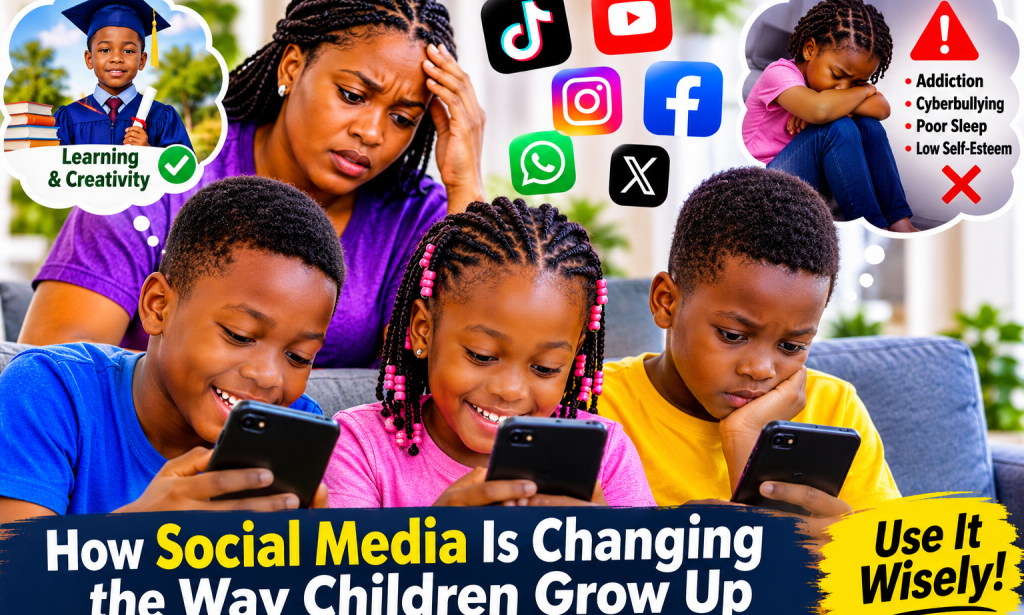
How Social Media Is Changing the Way Children Grow Up
Social media has become one of the biggest influences on modern childhood. Today, many children grow up using smartphones, watching online videos, following popular personalities and communicating with friends through the internet.
Unlike previous generations, children now have access to information, entertainment and different cultures from a very young age. While this development has created many opportunities, it has also introduced challenges that can affect how children think, behave and develop.
1. Children Are Growing Up Faster
One noticeable change is that children are exposed to adult conversations, fashion trends, relationships and lifestyles at an early age.
Through social media, they can easily encounter information that they may not yet understand. This exposure can influence their interests, language and behaviour before they are emotionally mature enough to understand everything they see.
2. Social Media Is Changing How Children Communicate
In the past, children mostly communicated through face-to-face conversations, playing together and visiting friends.
Today, many communicate through messages, comments, video calls and online games.
Although technology makes communication easier, excessive online interaction can reduce opportunities for children to develop important face-to-face communication skills.
3. Children Are Comparing Their Lives With Others
Social media often presents carefully selected pictures of beautiful homes, expensive clothes, holidays and seemingly perfect families.
Children who regularly see these posts may begin comparing their lives with what they see online.
Some may feel unhappy about their appearance, family background or possessions simply because they believe other people's lives are better.
4. Online Trends Are Influencing Children's Behaviour
Many children enjoy copying popular dances, challenges, expressions and fashion trends they discover online.
Some trends can encourage creativity and positive participation. However, others may promote dangerous activities, disrespectful behaviour or unhealthy competition for attention.
Parents should help children understand that something becoming popular online does not automatically make it right.
5. Education Has Become More Accessible
Social media is not only about entertainment. It can also be a valuable learning resource.
Children can discover educational videos, language lessons, science experiments, creative activities and useful tutorials.
A child interested in drawing, music, technology or sports can find people who teach those skills online.
When used appropriately, these opportunities can support children's education beyond the classroom.
6. Cyberbullying Is Becoming a Growing Concern
Another serious challenge is cyberbullying.
Some children receive insulting comments, embarrassing messages or hurtful posts from people online. Others may become victims of rumours, threats or public humiliation.
Unlike traditional bullying, online harassment can follow a child even after leaving school.
Parents, teachers and guardians should take these experiences seriously and encourage children to speak up whenever something makes them uncomfortable.
7. Screen Time Is Replacing Some Childhood Activities
Many children now spend long periods watching videos, scrolling through social media or playing online games.
As a result, some spend less time playing outdoors, reading books, participating in sports or interacting with family members.
Children need a healthy balance between technology and other activities that support their physical, emotional and social development.
8. Parents Must Become More Involved
Raising children in the digital age requires more than simply buying them smartphones and internet access.
Parents should understand the platforms their children use, establish reasonable screen-time boundaries and discuss online safety.
Most importantly, children should feel comfortable telling their parents when they encounter something frightening, inappropriate or confusing online.
Conclusion
Social media is changing childhood in ways that previous generations never experienced. It has created opportunities for learning, creativity and communication, but it has also introduced new risks.
The solution is not necessarily to keep children away from technology completely. Instead, they need guidance on how to use it wisely.
Children deserve an upbringing that includes both the benefits of modern technology and the valuable experiences of real-life friendships, family relationships, education and outdoor activities.
The future of childhood will depend partly on how well parents, teachers and society guide the younger generation through the digital world.











































You must be logged in to post a comment.