

Introduction
A stroke is a serious medical emergency that occurs when the blood supply to part of the brain is interrupted or when a blood vessel in the brain bursts. When this happens, brain cells begin to die because they are not receiving enough oxygen and nutrients.
Stroke can affect anyone, regardless of age, although the risk increases as people get older.
Recognising the early warning signs of stroke can save a life and prevent permanent disability.
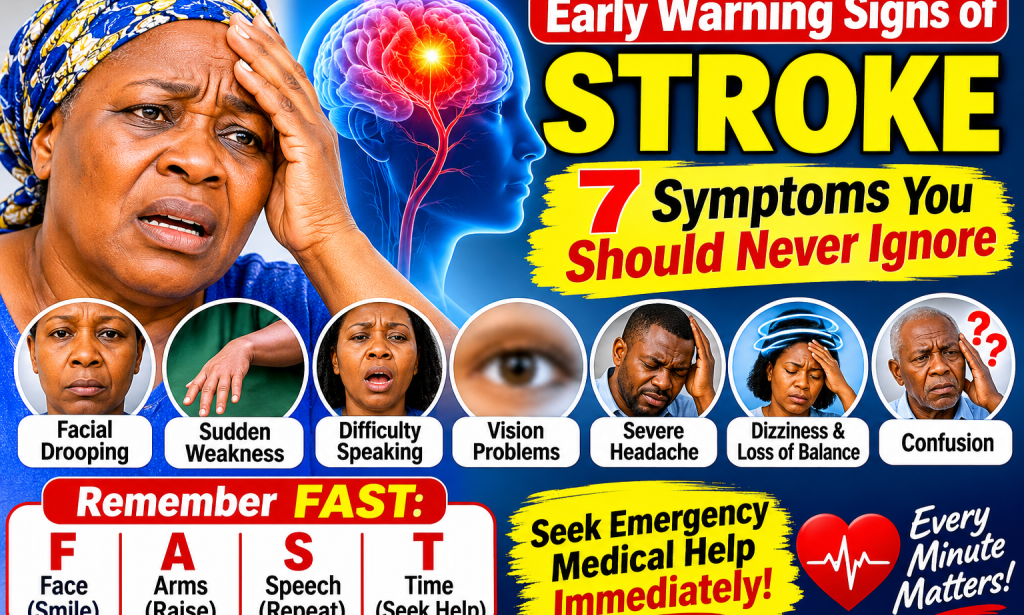
7 Early Warning Signs of Stroke
1. Sudden Weakness or Numbness
One of the common warning signs is sudden weakness or numbness in the face, arm, or leg, especially on one side of the body.
2. Difficulty Speaking
A person experiencing a stroke may suddenly struggle to speak, pronounce words clearly, or understand what others are saying.
3. Facial Drooping
One side of the face may suddenly droop. When the person smiles, one side of the mouth may not move properly.
4. Sudden Vision Problems
Stroke can cause sudden blurred vision, double vision, or loss of vision in one or both eyes.
5. Severe Headache
A sudden, extremely severe headache without an obvious cause may be a warning sign, particularly in a stroke caused by bleeding in the brain.
6. Dizziness and Loss of Balance
A person may suddenly experience dizziness, difficulty walking, loss of coordination, or problems maintaining balance.
7. Confusion
Sudden confusion, difficulty understanding conversations, or unusual changes in behaviour can also indicate a stroke.
Remember FAST: How to Recognise Stroke
- F – Face: Ask the person to smile. Does one side droop?
- A – Arms: Ask the person to raise both arms. Does one arm fall?
- S – Speech: Ask the person to repeat a simple sentence. Is their speech slurred?
- T – Time: If you notice any of these signs, seek emergency medical help immediately.
How Can You Reduce Your Risk of Stroke?
1. Monitor your blood pressure regularly.
2. Eat a balanced and healthy diet.
3. Exercise regularly.
4. Avoid smoking.
5. Limit alcohol consumption.
6. Maintain a healthy body weight.
7. Manage diabetes and high cholesterol.
8. Attend regular medical check-ups.
What Should You Do If Someone Develops Stroke Symptoms?
Do not wait for the symptoms to disappear. Seek emergency medical attention immediately, even if the symptoms improve after a few minutes.
Note the time the symptoms started. Do not give the person food, water, or medication unless instructed by a healthcare professional. Never attempt to treat a suspected stroke at home.
Conclusion
Stroke is a life-threatening condition, but recognising its warning signs early can make a significant difference.
Remember, every minute matters when someone is having a stroke.
Share this information with your family and friends. It might help save someone's life!


You must be logged in to post a comment.