

Introduction
Have you ever looked through a cloudy window and struggled to see what was on the other side? That is similar to what happens to someone living with cataracts.
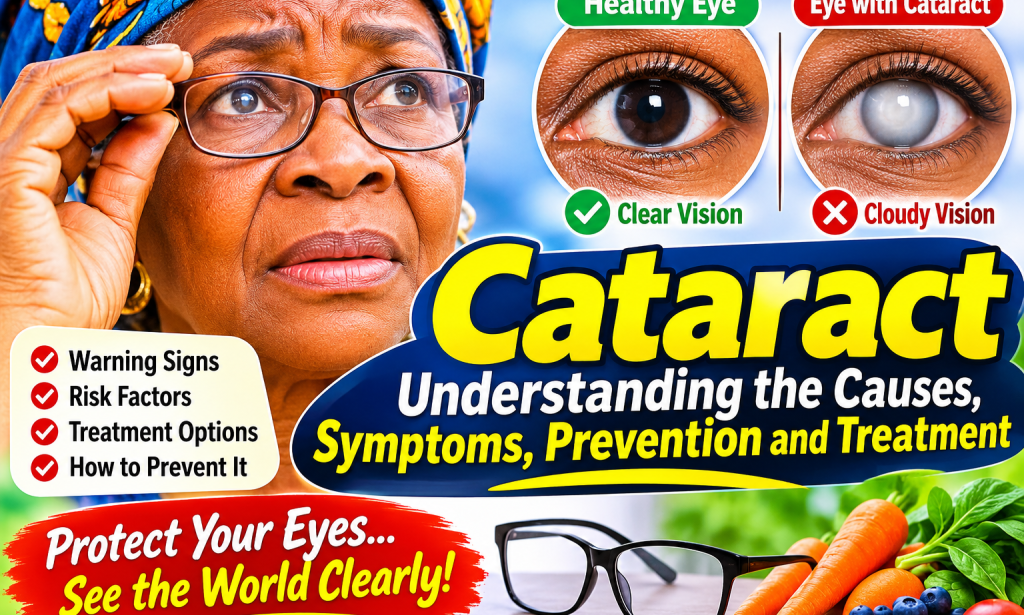
Cataracts are among the leading causes of visual impairment worldwide, particularly among older adults. They develop when the natural lens inside the eye becomes cloudy, making it difficult for light to pass through clearly.
The eye has a natural lens that helps focus light onto the retina, allowing us to see objects clearly. When this lens becomes cloudy, vision gradually becomes blurred, dull or foggy.
Although cataracts are commonly associated with ageing, they can also affect younger adults and, in some cases, children.
The good news is that cataracts are treatable, and many people regain good vision after appropriate treatment.
1. What Exactly Is a Cataract?
A cataract is the clouding of the natural lens of the eye. The lens is normally clear and transparent, but changes in its proteins can cause it to become cloudy.
Cataracts may develop in one eye or both eyes. However, they do not necessarily develop at the same rate in both eyes.
The condition usually progresses gradually, meaning that some people may not notice changes in their vision during the early stages.
2. What Causes Cataracts?
Several factors can contribute to the development of cataracts.
A. Ageing: This is the most common cause. As people grow older, proteins in the eye's natural lens gradually change, causing cloudiness.
B. Diabetes: People living with diabetes have an increased risk of developing cataracts, particularly when blood sugar levels are poorly controlled.
C. Eye Injuries: Trauma or injuries to the eye can damage the natural lens and cause cataracts.
D. Prolonged Use of Steroid Medications: Long-term use of certain steroid medicines can increase the risk of cataracts.
E. Excessive Exposure to Ultraviolet Rays: Long-term exposure to sunlight without adequate eye protection may contribute to cataract development.
F. Smoking: Smoking is associated with an increased risk of developing cataracts.
G. Family History: Some people may have a higher risk because of genetic factors.
H. Previous Eye Surgery or Eye Diseases: Certain eye conditions and previous eye operations may increase the likelihood of developing cataracts.
3. Signs and Symptoms of Cataracts
Cataracts usually develop slowly. Some of the common warning signs include:
1. Blurred or cloudy vision.
2. Difficulty seeing clearly at night.
3. Increased sensitivity to sunlight and bright lights.
4. Seeing halos around headlights and streetlights.
5. Colours appearing faded or yellowish.
6. Frequent changes in eyeglass prescriptions.
7. Difficulty reading small letters.
8. Double vision in one eye.
9. Difficulty recognising faces from a distance.
10. Poor vision even when wearing glasses.
If you experience these symptoms, visit an eye specialist for a proper examination.
4. Different Types of Cataracts
There are different types of cataracts depending on the part of the lens affected.
A. Nuclear Cataract: This develops in the centre of the lens and is commonly associated with ageing. It can gradually cause cloudy or yellowish vision.
B. Cortical Cataract: This develops around the outer edges of the lens. It may cause glare, particularly when driving at night.
C. Posterior Subcapsular Cataract: This develops at the back of the lens. It may progress faster than other types and can cause difficulty reading and seeing in bright light.
D. Congenital Cataract: This is a cataract present at birth or developing during childhood. Early assessment is important because it can interfere with normal visual development.
5. Who Is at Risk of Developing Cataracts?
Although anyone can develop cataracts, certain people have a higher risk.
These include:
- Adults aged 60 years and above.
- People living with diabetes.
- Smokers.
- People with a family history of cataracts.
- Individuals who have experienced eye injuries.
- People who use steroid medications for prolonged periods.
- Individuals with prolonged exposure to ultraviolet radiation.
6. How Are Cataracts Diagnosed?
An eye specialist can diagnose cataracts through a comprehensive eye examination.
Some examinations include:
1. Visual acuity test: This checks how clearly a person can see letters and objects at different distances.
2. Slit-lamp examination: This allows the eye specialist to examine the structures of the eye and identify cloudiness in the lens.
3. Retinal examination: This helps assess the back of the eye.
4. Eye pressure measurement: This checks the pressure inside the eye and helps identify other possible eye conditions.
Early diagnosis helps determine the appropriate treatment.
7. Can Cataracts Be Treated?
Yes! Cataracts are treatable.
During the early stages, an eye specialist may recommend stronger lighting, updated eyeglasses or other measures to help with daily activities.
However, when cataracts significantly interfere with reading, walking, working or other everyday activities, surgery is usually recommended.
8. What Happens During Cataract Surgery?
Cataract surgery is a procedure in which the cloudy natural lens is removed and usually replaced with a clear artificial lens called an intraocular lens (IOL).
The procedure is commonly performed using local anaesthesia, and many patients go home on the same day.
After surgery, patients must follow their doctor's instructions, use prescribed eye drops and attend follow-up appointments.
Most people experience significant improvement in their vision after successful surgery.
9. Can Cataracts Be Prevented?
There is no guaranteed way to prevent age-related cataracts. However, certain healthy habits may help reduce your risk.
- Eat fruits and vegetables regularly.
- Wear sunglasses that block 99–100% of UVA and UVB rays.
- Avoid smoking.
- Maintain healthy blood sugar levels.
- Eat a balanced diet.
- Protect your eyes from injuries.
- Avoid taking steroid medications without medical supervision.
- Go for regular eye examinations.
10. Important Myths About Cataracts
Myth 1: Cataracts only affect elderly people.
Fact: Although common in older adults, cataracts can also occur in younger people and children.
Myth 2: Eye drops can permanently remove cataracts.
Fact: Currently, there are no proven eye drops that can reverse an established cataract. Surgery is the effective treatment when vision is significantly affected.
Myth 3: Cataracts cause complete blindness immediately.
Fact: Most cataracts develop gradually, although some types can progress more quickly.
Myth 4: Eating carrots can cure cataracts.
Fact: Carrots provide vitamin A, which supports normal eye health, but they cannot remove an existing cataract.
Conclusion
Cataracts are a common but treatable eye condition. They can gradually affect vision and interfere with everyday activities if left untreated.
The most important thing is to recognise the warning signs, seek professional eye examinations and follow appropriate medical advice.
Never ignore persistent blurry vision, difficulty seeing at night or unusual changes in your eyesight.
Your eyes are precious. Protect your vision today because good eyesight contributes greatly to your quality of life.
HEALTH REMINDER
If you or someone around you is experiencing changes in vision, do not rely on home remedies or unproven eye medications. Visit a qualified eye-care professional for proper assessment.Short summary for Lodpost
Cataracts occur when the natural lens of the eye becomes cloudy, resulting in blurred vision, poor night vision and sensitivity to light. Although ageing is the most common cause, diabetes, smoking, eye injuries and prolonged steroid use can also increase the risk. Cataracts are treatable, and surgery can restore vision in many patients.


You must be logged in to post a comment.