

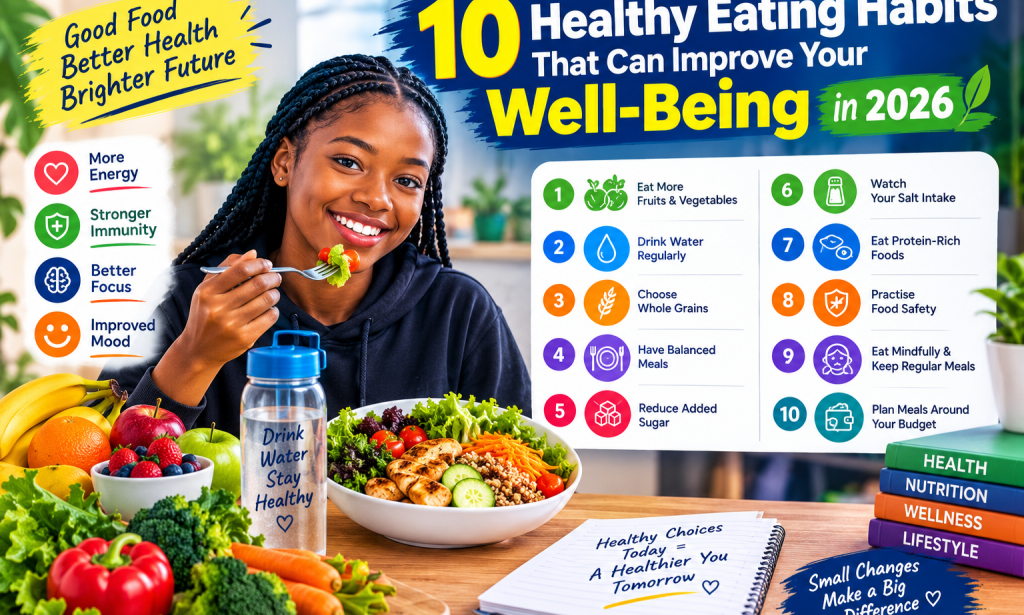
10 Healthy Eating Habits That Can Improve Your Well-Being in 2026
Introduction
Food plays an important role in our daily lives. It provides the energy and nutrients our bodies need to grow, function, and maintain good health. However, busy schedules, convenient processed foods, and inconsistent eating patterns can sometimes make healthy choices difficult.
The good news is that healthy eating does not have to involve expensive foods or complicated meal plans. Small, consistent changes can help you develop a more balanced approach to nutrition.
Here are ten practical eating habits that can support your well-being in 2026.
1. Eat a Variety of Fruits and Vegetables
Fruits and vegetables provide vitamins, minerals, fibre, and other beneficial nutrients.
Try including different colours and varieties in your meals. In Nigeria, accessible options may include oranges, pawpaw, watermelon, carrots, ugu, okra, tomatoes, and leafy vegetables.
Fresh, frozen, or appropriately stored alternatives can all contribute to a balanced diet.
Rather than relying on just one type of fruit or vegetable, aim for variety across your meals.
2. Drink Water Regularly
Water supports important body functions, including temperature regulation and digestion.
Make drinking water a regular part of your day, especially when the weather is hot or you are physically active. Your needs may vary depending on activity, climate, age, and health circumstances.
Water is a useful everyday choice because it does not contain the added sugars found in many sweetened beverages.
If you have been advised to restrict fluids for a medical reason, follow your healthcare professional's guidance.
3. Include Fibre-Rich Foods
Fibre supports digestive health and can help you feel satisfied after meals.
Good sources include beans, peas, whole grains, vegetables, fruits, and nuts.
Common Nigerian foods such as beans, oats, whole-wheat bread, and some varieties of whole-grain cereal can contribute to fibre intake.
Increase fibre gradually and drink enough fluids to help your digestive system adjust comfortably.
4. Choose Balanced Meals
A balanced meal supplies a combination of nutrients rather than relying heavily on a single food group.
Whenever practical, combine staple foods such as rice, yam, potatoes, or cassava with vegetables and a protein source such as beans, eggs, fish, or chicken.
For example, rice served with vegetables and beans can provide a useful mix of carbohydrates, fibre, and protein.
The exact combination will depend on food availability, personal preferences, cultural practices, and individual nutritional needs.
5. Reduce Excessive Added Sugar
Frequently consuming large amounts of added sugar can contribute to dental problems and increase the risk of certain long-term health conditions.
Sweetened drinks, sweets, cakes, and some packaged foods can contain substantial amounts of added sugar.
You do not necessarily have to eliminate every sweet food. Instead, make water a regular drink choice, check food labels when possible, and enjoy sugary treats in moderation.
Whole fruits are also a useful way to enjoy sweetness alongside fibre and other nutrients.
6. Pay Attention to Salt Intake
The body needs some sodium, but consistently consuming too much can contribute to high blood pressure.
Packaged snacks, instant foods, processed meats, seasoning products, and heavily salted meals may contain substantial amounts of sodium.
You can experiment with flavouring meals using onions, garlic, ginger, herbs, and spices rather than relying entirely on salt.
Making gradual changes can help you develop a preference for less salty foods.
7. Eat Protein-Rich Foods
Protein helps the body build and repair tissues and supports many normal bodily functions.
Useful food sources include beans, lentils, eggs, fish, chicken, milk, yoghurt, nuts, and other protein-containing foods.
You do not need to depend on expensive products to include protein in your diet. Beans and other locally available foods can be nutritious and practical options.
People with specific medical conditions may need individualized dietary advice.
8. Practise Food Safety
Healthy eating also depends on how food is handled, prepared, and stored.
Wash your hands before preparing meals, use clean utensils, wash produce appropriately, and cook foods thoroughly.
Keep raw foods separate from ready-to-eat meals to reduce cross-contamination. Refrigerate perishable foods promptly and avoid eating food that may have been stored unsafely.
These simple precautions help reduce the risk of foodborne illness.
9. Eat Mindfully and Maintain Regular Meals
Paying attention to hunger, fullness, and the experience of eating can help you develop a more comfortable relationship with food.
Whenever possible, eat without unnecessary distractions, take your time, and notice when you feel satisfied.
Regular meals can also make it easier to plan nutritious choices around school, work, and other responsibilities.
There is no single meal schedule that works for everyone. Choose a pattern that suits your circumstances and provides enough food to meet your needs.
10. Plan Meals Around Your Budget
Healthy eating does not have to be expensive.
Planning meals in advance can help you use ingredients efficiently, reduce food waste, and make shopping more manageable.
Consider affordable local staples such as beans, seasonal vegetables, eggs, and whole grains. Buying seasonal produce and preparing meals at home when practical may also help control costs.
A realistic plan built around accessible foods is often easier to maintain than a complicated diet requiring expensive ingredients.
Common Healthy Eating Mistakes to Avoid
Some people believe that eating well means avoiding all carbohydrates, skipping meals, or purchasing costly supplements. These approaches are not necessary for everyone and may make balanced eating more difficult.
Other common mistakes include relying heavily on sugary drinks, ignoring food safety, and following restrictive diets promoted on social media without checking whether the advice is reliable.
Be cautious of products or diets that promise dramatic health improvements in a short period.
If you have a medical condition, food allergy, or specific nutritional concern, consult a qualified healthcare professional for advice suited to your needs.
Conclusion
Healthy eating is about developing sustainable habits rather than pursuing perfection. Eating a variety of fruits and vegetables, drinking water regularly, choosing fibre-rich foods, moderating added sugar and salt, and practising food safety can all contribute to a balanced lifestyle.
You do not need to change everything at once. Start with one or two realistic improvements and build on them over time.
Final insight: Good nutrition begins with everyday choices. Make balanced meals, enjoy a variety of foods, and choose habits that support your well-being over the long term.


You must be logged in to post a comment.