

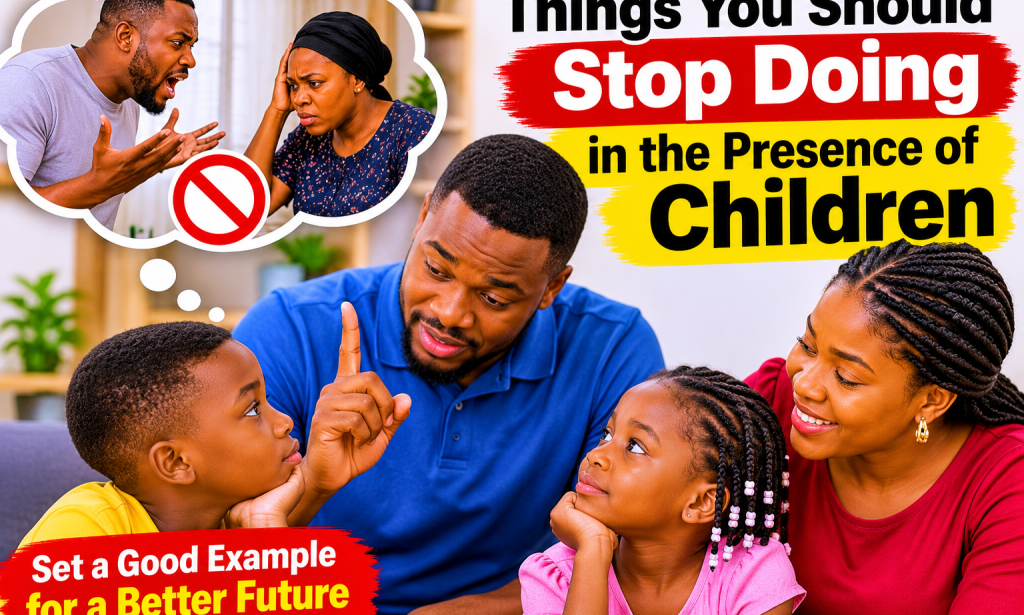
Things You Should Stop Doing in the Presence of Children
Introduction
Children are like sponges. They observe, listen and learn from the people around them, especially their parents, guardians and other adults they spend time with.
Sometimes, adults forget that children are watching even when nobody is directly teaching them anything. A child can remember the words you use, the way you treat others and how you behave when you are angry.
This is why raising children requires more than providing food, clothing, education and shelter. It also involves creating a healthy environment where they can learn good behaviour, respect and positive values.
There are certain things adults should stop doing in the presence of children because these behaviours can negatively influence their development.
Here are some of them.
1. Stop Fighting and Shouting at Each Other
One of the things adults should avoid doing in front of children is constantly fighting, shouting or exchanging insults.
Disagreements are normal in relationships and families, but the way adults handle them matters.
When children regularly witness aggressive arguments, they may become frightened, anxious or believe that shouting is the normal way to solve problems.
Some children may even grow up using the same behaviour when dealing with their friends or partners.
Adults should learn to handle disagreements calmly and respectfully, especially when children are around.
2. Stop Using Abusive and Insulting Words
Children learn language by listening to the people around them.
When adults constantly use insults, swear words or disrespectful expressions, children may begin repeating those words without understanding their meaning.
For example, a child who regularly hears adults insulting others may eventually use similar words when speaking to teachers, classmates or family members.
If you want children to speak politely, make sure the language they hear at home reflects the behaviour you want them to develop.
3. Stop Insulting Other People in Their Presence
Some adults enjoy discussing other people's weaknesses, appearance, financial situation or personal problems in front of children.
Although children may not understand every detail, they observe how adults speak about others.
When children grow up hearing constant criticism and gossip, they may begin to believe that disrespecting people is acceptable.
Teach children to treat others with kindness and avoid making people feel inferior because of their circumstances.
4. Stop Comparing Children With Others
Comparing one child with another can damage a child's confidence.
Statements such as "Why can't you be like your brother?" or "Look at your classmate; she is better than you" can make children feel inadequate.
Every child has different abilities, strengths and learning speeds.
Instead of comparing children, encourage them to improve themselves. Recognise their efforts, celebrate their progress and help them develop their individual talents.
5. Stop Fighting Over Money in Front of Children
Financial difficulties can create pressure in a family, but adults should be careful about how they discuss money around children.
Constantly arguing about money, blaming one another for financial problems or making children feel responsible for household expenses can create unnecessary emotional pressure.
Children should understand that families have responsibilities, but they should not be made to carry adult financial burdens.
Parents should handle financial disagreements responsibly and avoid using children as messengers or taking sides in arguments.
6. Stop Displaying Disrespect Towards Your Partner
Children learn how relationships work by observing the adults around them.
If a parent constantly insults, humiliates or disrespects the other parent, children may begin to see such behaviour as normal.
They may also struggle to understand what healthy relationships should look like.
Even when adults disagree, they should try to communicate respectfully.
Showing children mutual respect helps them understand the importance of kindness, patience and healthy communication.
7. Stop Discussing Adult Problems With Children
Children should not be forced to carry problems that are meant for adults to handle.
For example, discussing serious relationship conflicts, financial disagreements or family disputes in a way that makes children feel responsible can affect their emotional well-being.
It is important to communicate with children honestly, but conversations should be appropriate for their age and level of understanding.
Allow children to enjoy their childhood without making them responsible for solving adult problems.
8. Stop Using Physical Violence as a Normal Way of Solving Problems
Children observe how adults respond when they are angry.
If they regularly see adults using physical violence to settle disagreements, they may begin to believe that hurting someone is an acceptable response to frustration.
Discipline should teach children responsibility and good behaviour, not simply create fear.
Adults should model self-control, peaceful communication and appropriate ways of resolving conflicts.
9. Stop Spending All Your Time on Your Phone
Children need attention, communication and meaningful interaction with the adults around them.
When parents or guardians spend most of their time scrolling through social media, watching videos or chatting on their phones, children may feel ignored.
Although technology is part of modern life, adults should create time to talk, play, listen and participate in activities with children.
Giving children your attention helps them feel valued and supported.
10. Stop Making Promises You Do Not Keep
Children often trust the promises adults make to them.
When you repeatedly promise something and fail to fulfil it without explanation, children may gradually lose trust in your words.
For example, promising to attend a school event, buy something important or spend time with them and repeatedly failing to do so can cause disappointment.
It is better to make realistic promises and keep them.
If circumstances change, explain the situation honestly and appropriately.
11. Stop Encouraging Dishonesty
Children learn honesty from the behaviour they observe.
For example, if an adult tells a child to lie about their absence from home, pretend not to be available when someone visits or give false information to avoid responsibility, the child may begin to see dishonesty as normal.
If you want children to grow into honest individuals, demonstrate honesty in your everyday actions.
Teach them that telling the truth and accepting responsibility are important values.
12. Stop Making Fun of Children's Mistakes
Children are still learning, and mistakes are part of their development.
Laughing at them, embarrassing them in front of others or constantly reminding them of their failures can affect their confidence.
Instead of making them feel ashamed, help them understand what went wrong and how they can improve.
A child who feels safe making mistakes is more likely to ask questions, learn new things and develop confidence.
Why Adults Should Be Careful About Their Behaviour
Children do not learn only through formal lessons. They also learn by observing everyday behaviour.
The way adults communicate, handle anger, treat others and respond to difficult situations can influence how children understand the world.
This does not mean parents must be perfect. Every adult makes mistakes.
What matters is recognising when your behaviour is inappropriate, correcting it and showing children that people can take responsibility for their actions.
Conclusion
Raising children requires patience, responsibility and good examples.
You cannot expect children to become respectful, honest and well-behaved if they constantly witness the opposite behaviour from the adults around them.
Remember that children are watching even when you think they are not paying attention.
Be mindful of your words, control your actions and create an environment where children can grow with confidence, respect and good values.
The best way to teach children good behaviour is not only by telling them what to do but also by showing them through your own actions.









































You must be logged in to post a comment.