
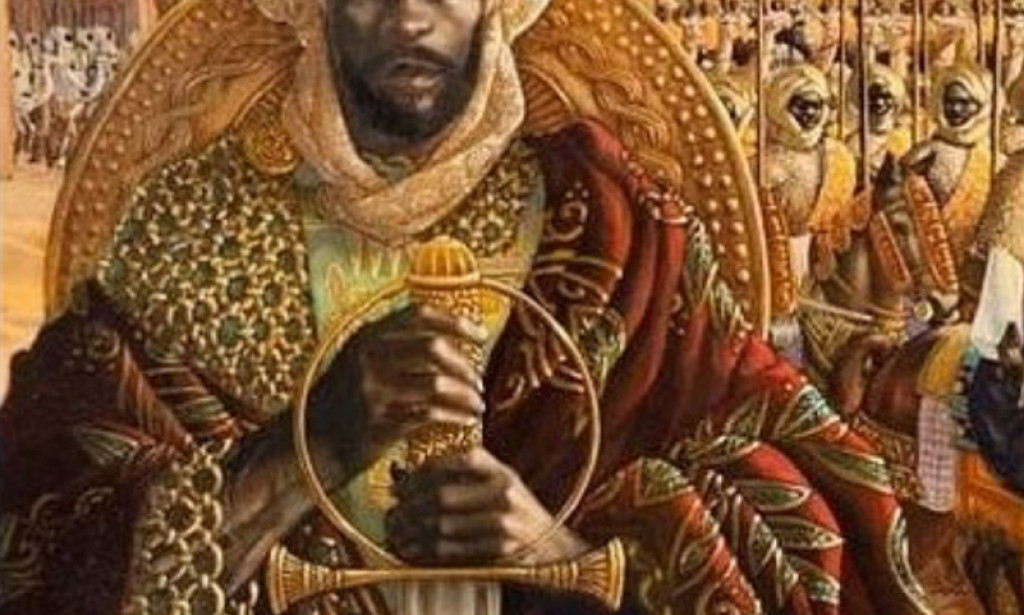
An Empire at the Center of the Medieval World
By the 14th century, Mali was not peripheral — it was pivotal.
Its territorial reach stretched across much of present-day Mali, Senegal, Gambia, Guinea, Niger, and Mauritania. Its power rested on strategic control of trans-Saharan trade routes linking West Africa to North Africa and the Mediterranean basin. Gold from Bambuk and Bure flowed north; salt from Taghaza moved south. These were not regular commodities. Gold overthrew currencies across the Mediterranean world.
Medieval Arab chroniclers such as al-ʿUmarī described Mali as a land of astonishing wealth and order. When Mansa Musa undertook his famous pilgrimage to Mecca in 1324, he traveled with a caravan allegedly numbering in the tens of thousands. Contemporary accounts suggest that his distribution of gold in Cairo depressed its value for years — a rare case of a single ruler influencing a regional economy (see al-ʿUmarī’s accounts embedded in 14th-century Cairo archives).

You must be logged in to post a comment.