
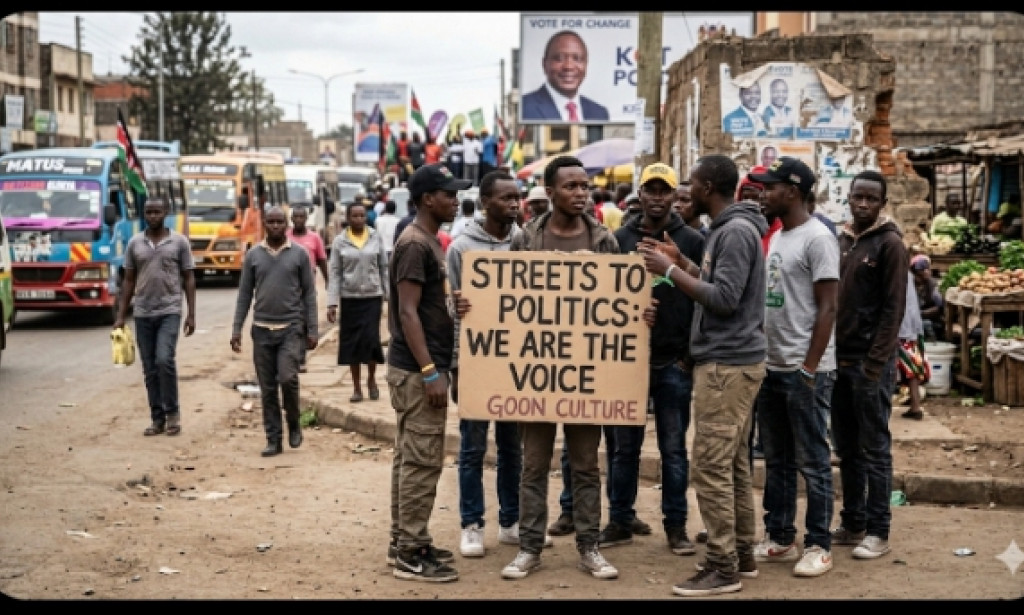
In recent years, Kenya has been experiencing a concerning shift—one that connects life on the streets with influence in politics. Many people now refer to this as “goon culture.” What was once seen as small-scale crime or informal gang activity has slowly grown into something bigger, reflecting deeper issues like unemployment, political pressure, and insecurity.
The Origins: Life on the Margins
To truly understand this trend, we need to start at the grassroots level. In cities like Nairobi, Kisumu, and Mombasa, many young people wake up each day facing limited opportunities. Jobs are scarce, the cost of living is high, and access to quality education is not always guaranteed.
While some manage to survive through small businesses or informal work, others find it harder to get by. In such situations, the need to survive can push some into small groups that offer quick money or protection. These groups often begin informally—just a few individuals working together, sometimes engaging in activities like pickpocketing or minor street crime.
How Things Evolve
Over time, these small groups don’t always remain small. Some grow more organized, developing clear leadership and stronger connections. With that structure comes visibility—and eventually, demand.
This is where things begin to shift. During political seasons, especially around rallies or elections, such groups may be approached and used in ways that go beyond their original purpose. They may be asked to disrupt gatherings, intimidate opponents, or create scenes that draw attention.
For many of these young people, the offer of money or protection can be hard to turn down. What started as a way to survive slowly becomes tied to larger political interests.
The Political Link
The connection between these groups and politics is not always straightforward, but it is often talked about. There have been repeated claims over time that some leaders rely on groups of young men to influence events on the ground.
This creates a difficult cycle. Young people, already struggling, may begin to depend on these opportunities. At the same time, the presence of such groups can increase tension, especially during sensitive political periods. Over time, this kind of behavior risks becoming normalized.
The Impact on Everyday Life
The effects of this go beyond politics—they are felt in everyday life.
People may feel less safe in their neighborhoods. Small business owners can lose income during unrest. Communities begin to live with uncertainty. At the same time, many young people are unfairly judged, with some being labeled negatively even when they are simply trying to find their way.
There is also a broader concern about trust. When disorder becomes part of the political environment, it can affect how people view leadership and governance.
Looking at the Bigger Picture
It’s important to understand that this is not just a “youth problem.” Blaming young people alone misses the bigger picture. Issues like unemployment, inequality, and limited opportunities play a huge role in shaping these outcomes.
Many of these young individuals are not choosing this path out of desire, but out of circumstance.
Moving Forward
Addressing this issue requires more than quick solutions. It calls for a thoughtful and balanced approach.
Creating opportunities for young people—through skills training, jobs, and support for small businesses—can make a real difference. At the same time, there needs to be accountability in leadership and a stronger commitment to peaceful processes.
Communities also have a role to play by supporting and guiding young people, offering mentorship, and creating safe spaces where they can grow.
Final Thoughts
The rise of goon culture in Kenya reflects deeper challenges within society. It tells a story not just of crime or politics, but of young people searching for opportunity and belonging in a difficult environment.
With the right focus and collective effort, it’s possible to change this narrative—turning energy and potential away from conflict and toward growth, stability, and a better future for everyone.


You must be logged in to post a comment.