

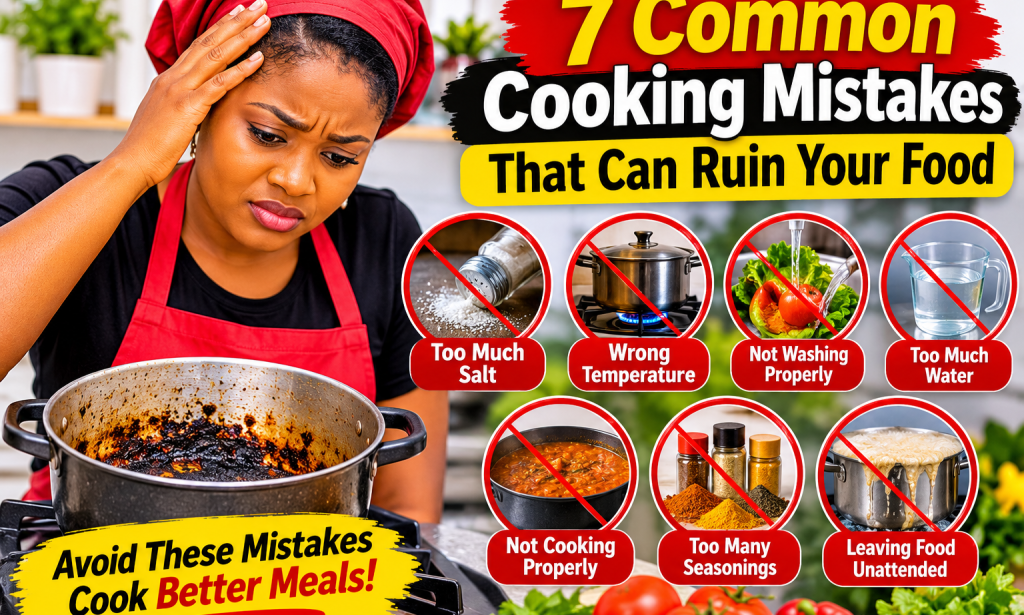
7 Common Cooking Mistakes That Can Ruin Your Food
Cooking is an important part of everyday life, but preparing delicious meals requires more than simply putting ingredients into a pot. Sometimes, small mistakes can affect the final result, making food too salty, burnt, watery or tasteless.
Whether you are a beginner or an experienced cook, understanding common cooking mistakes can help you prepare better meals.
Here are seven cooking mistakes you should avoid.
1\. Adding Too Much Salt
Salt helps improve the taste of food, but adding too much can make a meal unpleasant.
Some people add salt several times while cooking without tasting the food first. This can result in an overly salty meal.
How to avoid it: Add salt gradually and taste your food as you cook. Remember that ingredients such as seasoning cubes and stock may already contain salt.
2\. Cooking With the Wrong Temperature
Using extremely high heat for every meal can cause food to burn on the outside while remaining undercooked inside.
Some foods require low or medium heat to cook properly, while others need higher temperatures.
How to avoid it: Understand the cooking temperature required for different meals. Reduce the heat when necessary and avoid rushing the cooking process.
3\. Not Washing Your Cooking Ingredients Properly
Poor food preparation can introduce dirt and harmful microorganisms into meals.
Vegetables, fruits and other ingredients should be handled carefully before cooking.
How to avoid it: Wash fresh produce under clean running water. Keep raw meat, fish and poultry separate from ready-to-eat foods to prevent cross-contamination.
4\. Adding Too Much Water
Adding excessive water can affect the consistency of many meals.
For example, too much water when preparing jollof rice can make the rice soft and soggy instead of producing separate, well-cooked grains.
How to avoid it: Follow the recommended liquid measurements for your recipe. Add water gradually when necessary.
5\. Not Allowing Food to Cook Properly
Some people become impatient while cooking and remove food from the heat before it is properly prepared.
This can affect the taste and texture of food. In the case of meat, fish and poultry, insufficient cooking can also create food safety risks.
How to avoid it: Follow appropriate cooking times and temperatures. Use a food thermometer when necessary, especially for poultry and meat.
6\. Using Too Many Seasonings
Seasonings can improve the taste of food, but using too many different spices and seasoning cubes can make a meal taste confusing or overpowering.
Instead of improving the flavour, excessive seasoning can hide the natural taste of the ingredients.
How to avoid it: Choose seasonings that complement one another and use them in balanced quantities.
7\. Leaving Food Unattended While Cooking
Leaving food on the stove without checking it regularly can cause it to burn or boil over.
This is particularly common when preparing rice, soups, sauces and stews.
How to avoid it: Pay attention to your cooking, check the food regularly and adjust the heat when necessary.
Conclusion
Preparing delicious food requires patience, attention and proper techniques. Simple mistakes such as adding too much salt, using excessive water or cooking at the wrong temperature can affect the quality of a meal.
By avoiding these seven common cooking mistakes, you can improve your cooking skills and prepare meals that look, smell and taste better.
Remember, good cooking is not just about the ingredients you use; it is also about how you prepare them.





































You must be logged in to post a comment.