
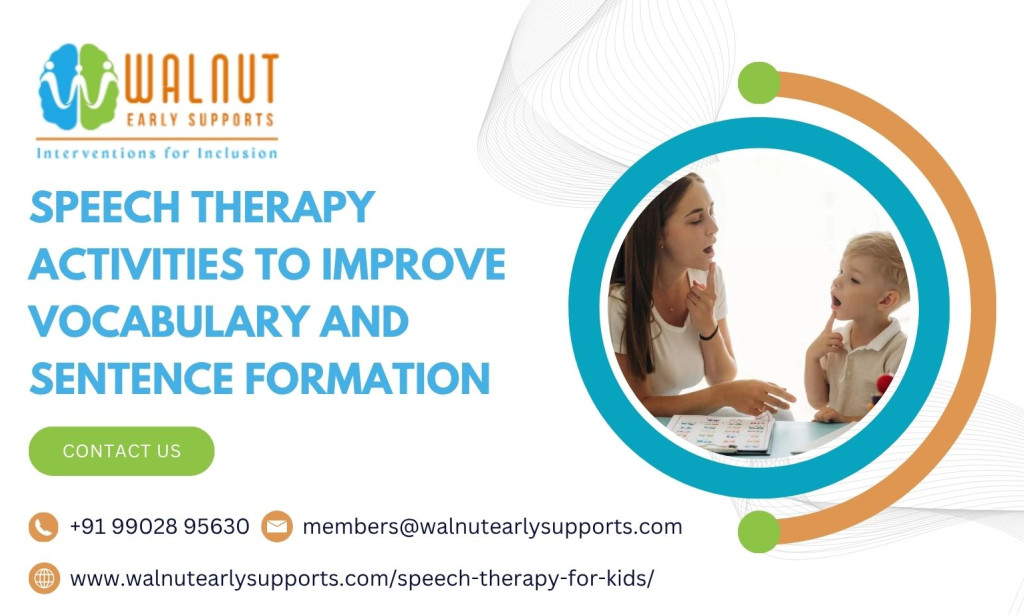
Learning new words is an important part of a child’s communication development. However, knowing individual words is only one part of effective communication. Children also need to learn how to combine words, create sentences, describe events, ask questions, and express their thoughts clearly.
For children who need additional communication support, Speech Therapy Activities can provide meaningful opportunities to practice vocabulary and sentence formation. When these activities are connected to play, stories, pictures, and everyday experiences, children can learn language in a way that feels natural and enjoyable.
Why Vocabulary and Sentence Skills Matter
Vocabulary gives children the words they need to talk about people, objects, actions, feelings, and experiences. Sentence formation helps them put those words together to communicate complete ideas.
For example, a child may know the words “dog” and “run” but may need support combining them into “The dog is running.” With regular practice, children can gradually learn to use longer and more detailed sentences.
Strong vocabulary and sentence skills can also support listening comprehension, storytelling, classroom participation, reading, and social interaction. Every child develops at a different pace, so activities should be adjusted to their communication level and individual needs.
1. Picture Description Activities
Pictures can provide an easy starting point for vocabulary and sentence practice. Choose pictures showing familiar people, animals, objects, or everyday activities.
Begin by asking your child to name what they see. Then encourage them to describe the picture using simple questions:
“What is it?”
“What color is it?”
“What is it doing?”
“Where is it?”
For example, if the picture shows a girl eating an apple, help your child move from “girl” to “girl eating” and eventually to “The girl is eating an apple.”
2. Build Longer Sentences
Children who use short phrases can be encouraged to gradually add more information. Start with a word or short phrase your child already uses and expand it naturally.
If your child says, “Car,” you might say, “The car is moving.” If they say, “Red car,” you could model, “The red car is moving fast.”
There is no need to make the child repeat every sentence. Hearing slightly longer and more detailed language during everyday interactions gives them useful examples to learn from.
3. Storytelling With Picture Sequences
Picture sequences can help children organize their thoughts and understand how events happen in order. Choose three or four pictures that show a simple activity.
Ask your child to explain what happens first, next, and last. Encourage them to use words such as “first,” “then,” and “finally.”
If they have difficulty creating a sentence, provide a sentence starter such as, “First, the boy…” This gives them a structure while allowing them to complete the idea.
4. Pretend Play for Language Practice
Pretend play is a great way to practice vocabulary and sentences because it creates natural reasons to communicate. Use toy kitchens, dolls, cars, animals, or building blocks.
During play, introduce words related to actions, descriptions, and objects. For example, while playing with a toy kitchen, you could say, “The baby is hungry,” “Let’s cook dinner,” or “Put the spoon on the table.”
These Fun Speech Therapy Activities can encourage children to use language while following their own interests.
5. Category and Word Association Games
Help your child learn how words are connected by creating simple categories. Choose a group such as animals, food, clothing, or vehicles.
Ask your child to name items that belong to the category. Then encourage them to describe one item.
For example, if the category is animals, your child might choose “elephant.” Ask, “What does an elephant look like?” or “Where does it live?”
This activity builds vocabulary while encouraging children to use descriptive language and complete sentences.
6. Question-and-Answer Practice
Questions provide valuable opportunities for children to practice both understanding and sentence formation. Start with simple “what,” “who,” and “where” questions.
For example:
“Who is driving?”
“What is the boy holding?”
“Where is the cat?”
Once your child is comfortable with these questions, introduce “why” and “how” questions. Encourage them to answer with more than one word when they are ready.
7. Use Everyday Routines
You do not need special equipment to support vocabulary and sentence development. Everyday activities such as cooking, shopping, getting dressed, and cleaning can become language-learning opportunities.
Talk about what you are doing and encourage your child to participate. While preparing food, you might discuss ingredients, colors, sizes, and actions.
During shopping, ask your child to name items, describe them, or tell you what you need to buy. These natural conversations help children connect language with real experiences.
Making Practice Comfortable and Effective
Children learn best when they feel comfortable and interested. Keep activities short and choose topics that your child enjoys.
Give your child enough time to respond. Avoid completing their sentences too quickly. If they cannot find a word, offer a clue or model the answer naturally.
Praise communication attempts, even when the sentence is not perfect. Gentle modeling is often more helpful than correcting every mistake.
If your child is receiving speech-language therapy, follow the goals provided by their speech-language professional. A therapist can suggest activities that are appropriate for your child's specific needs.
Digital Resources for Additional Practice
Digital resources can add variety to language practice at home and in therapy sessions. Online speech therapy materials may provide interactive activities that support vocabulary, sentence building, comprehension, and communication.
Parents and professionals can also use trusted speech and language therapy resources to find structured activities that match different language goals. The most useful resources are those that can be adapted to a child's age, abilities, interests, and therapy needs.
Walnut Early Supports offers digital therapy materials designed to support children's speech, language, communication, and developmental learning. These resources can complement everyday conversations and play-based activities.
Conclusion
Vocabulary and sentence formation develop through regular interaction and meaningful practice. Pictures, stories, pretend play, categories, questions, and everyday routines can give children many opportunities to learn and use language.
With patience and encouragement, Speech Therapy Activities can become a natural part of a child's daily routine. The goal is not to expect perfect sentences immediately but to help children gradually build their vocabulary, combine words, express ideas, and become more confident communicators.

You must be logged in to post a comment.