

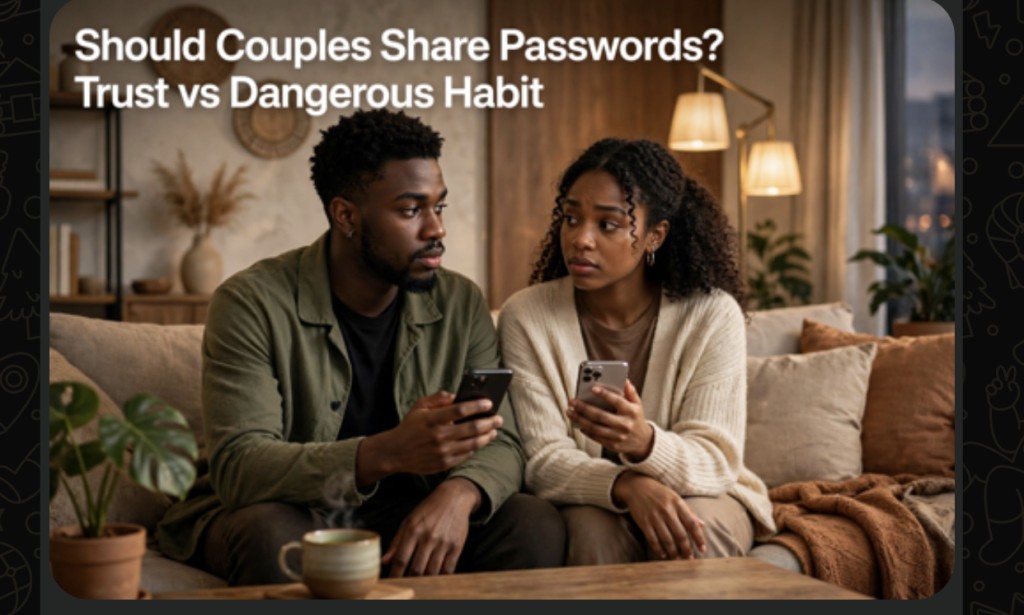
Why people think it's TRUST:
• "If you have nothing to hide, why hide your phone?"
• Some couples see it as transparency, especially married couples wey dey share everything
• E fit reduce suspicion and jealousy
Why e fit be DANGEROUS HABIT:
1. Privacy still matters — even for married people. Your DMs fit contain your friend's secret wey dem tell you in confidence, or work gist.
2. It kills trust instead of building it — If you need password to trust person, trust no dey there before. You go still dey check everyday.
3. Breakup = Wahala — If you share bank app, email, Instagram and una break up? Person fit delete your business, read your chats, or lock you out.
4. Nigeria factor — We see cases where boyfriend use girlfriend phone go collect loan, or girlfriend go post for guy's WhatsApp status. Password sharing don cause many police cases.
My honest take for you:
True trust na: "I know your password but I don't need to check your phone to feel secure."
Instead of sharing passwords, try this:
• Have open phone policy — no need to hide phone when message enter, but no need to dey search am
• Share access for emergency only — like "my PIN na 1234 if emergency" not "make I dey check your chats daily"
• Talk about boundaries — Agree wetin be okay and wetin no be okay
If na married couple with joint account or business, sharing some passwords makes sense. But for dating? Abeg keep small privacy.
What side you dey?
You think couples SHOULD share passwords to prove love, or you think na red flag?
Should Couples Share Passwords? A Sign of Trust or a Dangerous Habit?
In today's digital world where our phones hold our entire lives, one question keeps causing fights in Nigerian relationships: Should couples share passwords?
Some people say sharing your phone password, Instagram, or bank app password proves you love and trust your partner. Others say it is a red flag and a dangerous habit that can ruin the relationship. So, which one is true?
Why Some Couples Share Passwords
For many married couples, especially those with joint business or joint accounts, sharing passwords feels normal. The reasons include:
1. Transparency: They want to show they have nothing to hide.
2. Convenience: It is easier to handle bills, answer calls, or use one Netflix account.
3. Security: If something happens in an emergency, the other partner can access important information.
4. To Stop Jealousy: Some partners think giving password will make their boyfriend or girlfriend stop suspecting them.
In this case, sharing looks like trust.
Why Sharing Passwords Can Be Dangerous
But psychologists and relationship experts warn that forced password sharing can do more harm than good.
1. Privacy is Still Important: Even in marriage, everyone needs some privacy. Your WhatsApp may contain your friend's secret that they told you in confidence, or private chats with your family. Sharing password means you are also sharing other people's privacy.
2. It Does Not Build Trust, It Shows Lack of Trust: Real trust is when you do NOT need to check your partner's phone to feel secure. If you have to check everyday, trust was never there.
3. It Can Lead to Abuse and Control: In Nigeria, we have seen cases where a boyfriend used his girlfriend's phone to collect loan from loan apps, or a girlfriend posted insult on her boyfriend's WhatsApp status. Once you give password, you give power to someone to impersonate you.
4. Breakup Becomes Messy: What happens if you break up? Your ex still has your email password, your Instagram, your bank app? They can delete your business page, leak your chats, or lock you out. Changing all passwords after breakup is stressful.
5. It Creates Anxiety: When you know someone is always checking your phone, you start deleting normal chats just to avoid quarrel. That is not love, that is fear.
What Healthy Couples Do Instead of Sharing Passwords
You don't need password to prove love. Healthy couples do this instead:
• Open Phone Policy, Not Open Password Policy: You don't hide your phone when message enters, but your partner does not need to search it. If your phone rings, you can answer it in front of each other.
• Agree on Boundaries: Talk about what is okay and what is not okay. For example, "You can use my phone to make calls, but don't open my chats."
• Share For Emergency Only: You can tell your partner your phone PIN for emergency like "My PIN is 1234 if you need to call my mother" but that does not mean he or she should be checking your DMs every night.
• Build Trust Offline: Trust is built by how you behave in real life, keeping promises, being honest, not by giving Instagram password.
When Is It Okay to Share Passwords?
Sharing can make sense if:
• You are married and have a joint bank account or joint business email.
• You both agree willingly, not because one person is forcing the other.
• It is for a specific purpose like managing Netflix, DSTV, or a joint savings app.
Even then, use password manager and two-factor authentication to stay safe.
For dating couples? Experts advise to keep your personal passwords private. Love does not need your Gmail password to survive.
Final Verdict: Trust vs Habit
Should couples share passwords? The answer is: sharing should be a choice, not a test. If your partner says "If you love me, give me your password," that is a red flag. True love says "I trust you even without your password."
Remember, your phone is your private property. Sharing it should make you feel safe, not trapped.
What do you think? Should couples share passwords to prove love or is it a dangerous habit? Drop your opinion in the comment.


You must be logged in to post a comment.