
📌 Table of Contents
- Introduction
- What is JSS1 in Nigeria?
- Overview of the Updated NERDC Curriculum
- Structure of JSS1 Subjects
- Complete List of JSS1 Subjects in Nigeria
- Core Subjects
- Pre-Vocational Subjects
- Cultural, Civic & Language Subjects
- ICT / Digital Studies
- ⭐ Trade Subjects (Skills-Based Learning)
- Importance of JSS1
- How to Excel in JSS1
- Common Challenges in JSS1
- Career Path After JSS1
- FAQs
- Conclusion
1. Introduction
In recent updates to Nigeria’s education system, the Nigerian Educational Research and Development Council (NERDC) has continued to improve the Basic Education Curriculum to make learning more practical, modern, and skill-based.
Instead of focusing only on theory, the curriculum now places stronger emphasis on ICT, entrepreneurship, and vocational skills. This helps students build both academic knowledge and practical abilities from an early stage.
JSS1 is the first year of Junior Secondary School and serves as the foundation for all learning in the secondary education system. It is where students begin to experience a more structured and advanced academic environment compared to primary school.
According to the official curriculum framework of the NERDC (https://www.nerdc.gov.ng), the Basic Education Curriculum is designed to prepare students for BECE while also equipping them with life and work skills.
2. What is JSS1 in Nigeria?
JSS1 (Junior Secondary School 1) is the entry point into secondary education in Nigeria.
At this stage:
- Students transition from primary school to secondary school
- Subjects become more detailed and structured
- Teachers introduce practical and technical learning
- Students begin early preparation for BECE
- New subjects such as ICT and trade subjects are introduced
JSS1 lays the foundation for JSS2 and JSS3 success.
3. Overview of the Updated NERDC Curriculum
The Basic Education Curriculum developed by the NERDC covers:
- Primary 1–6
- JSS1–JSS3
Key improvements in the curriculum include:
- ICT and digital literacy integration
- Entrepreneurship education
- Introduction of trade subjects
- Practical learning approach
- Skill-based assessment system
These updates ensure students are prepared for both academic success and real-world challenges.
4. Structure of JSS1 Subjects
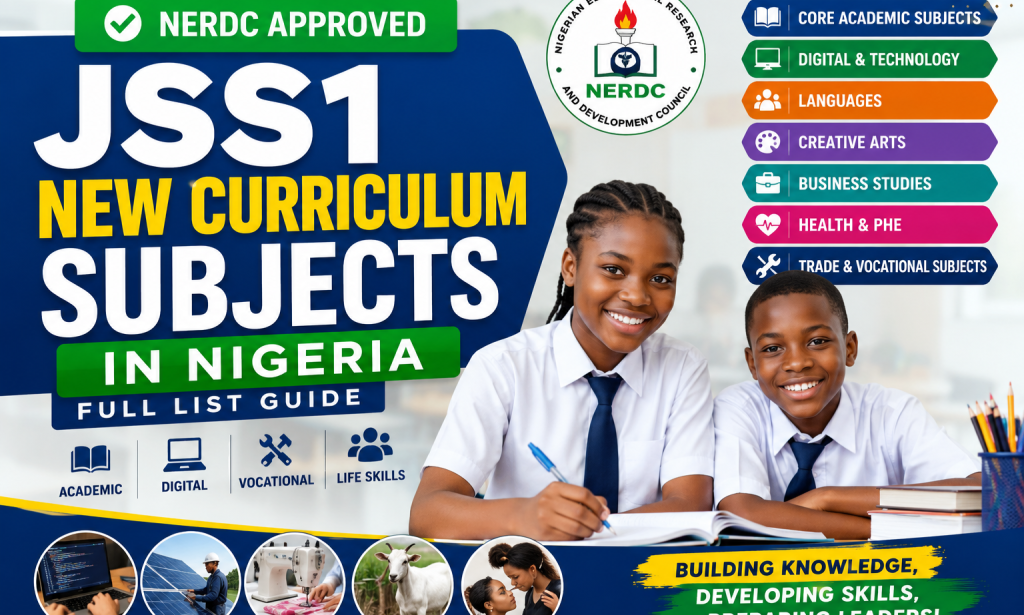
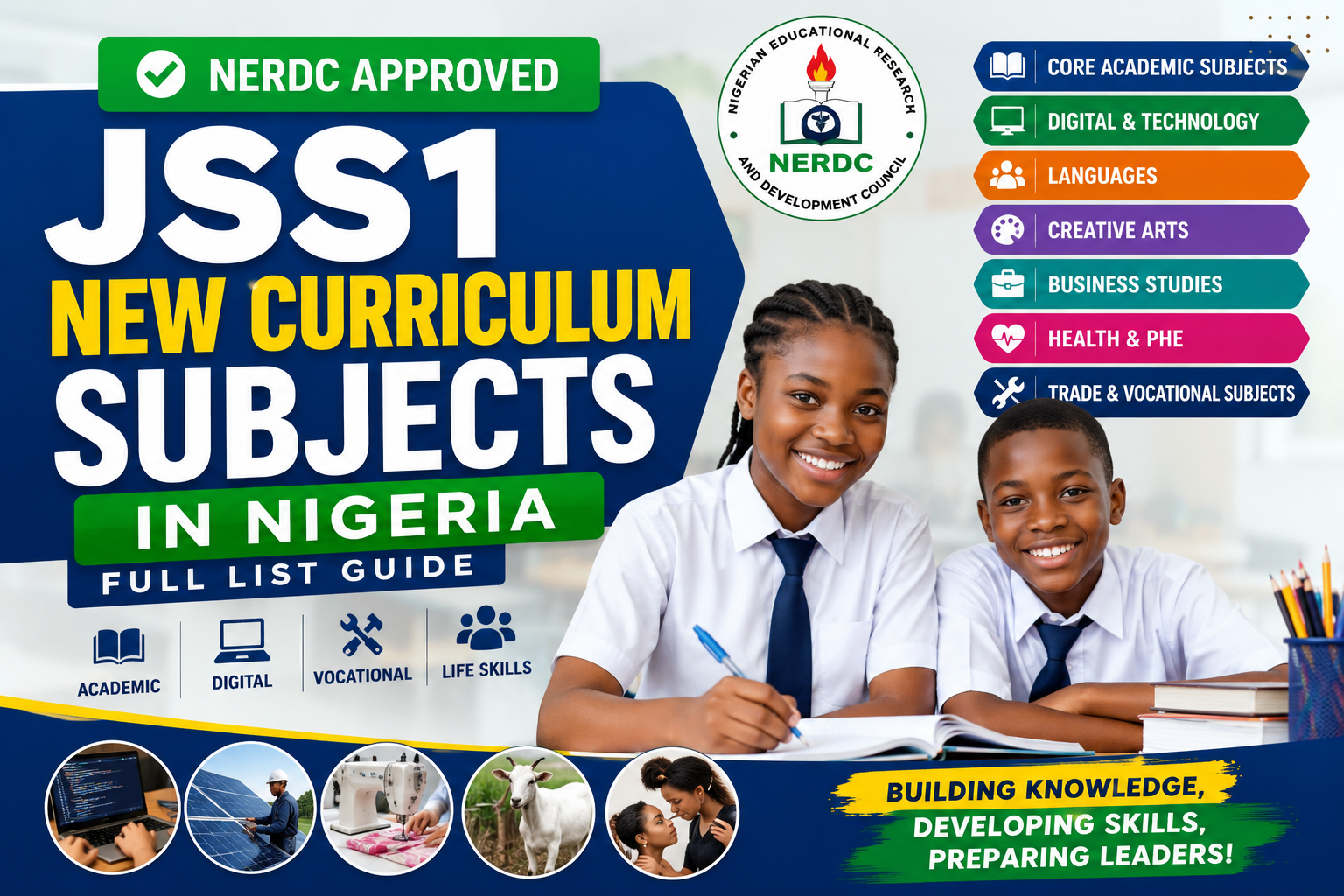
The JSS1 curriculum is organized into clear learning categories:
✔ Core Subjects (Compulsory)
✔ Pre-Vocational Subjects
✔ Cultural, Civic & Language Subjects
✔ ICT / Digital Studies
✔ ⭐ Trade Subjects (Skill-Based Options)
This structure ensures a balanced education system combining theory and practical learning.
5. Complete List of JSS1 Subjects in Nigeria
Below is the correct NERDC-aligned subject structure used in Nigerian schools.
6. Core Subjects (Compulsory for All Students)
These are the foundation academic subjects every student must take.
📘 English Studies
Students learn:
- Grammar basics
- Reading comprehension
- Writing skills
- Vocabulary development
- Oral communication
📗 Mathematics
Topics include:
- Number systems
- Basic algebra introduction
- Fractions and decimals
- Geometry basics
- Simple word problems
🔬 Basic Science and Technology
Students are introduced to:
- Basic scientific concepts
- Matter and environment
- Simple experiments
- Introduction to physics and biology
- Basic technology ideas
🌍 Social Studies
- Family and society
- Culture and values
- Citizenship education
- Environment and community
- Social behavior
7. Pre-Vocational Subjects
These subjects introduce practical life skills early.
⚙️ Basic Technology
- Introduction to tools
- Simple machines
- Technical drawing basics
- Workshop safety rules
🏡 Home Economics
- Food and nutrition basics
- Clothing and textiles introduction
- Family living education
- Home management basics
🌾 Agricultural Science
- Introduction to farming
- Soil basics
- Crop types
- Animal husbandry introduction
8. Cultural, Civic & Language Subjects
🎭 Cultural and Creative Arts (CCA)
- Drawing and painting
- Music basics
- Drama introduction
- Cultural appreciation
🏛 Civic Education
- Rules and responsibilities
- Good citizenship
- National values
- Social behavior
🗣 Nigerian Languages
Students may study:
- Hausa
- Igbo
- Yoruba
🌍 Religious Studies
Students choose one:
- Christian Religious Studies (CRS)
- Islamic Religious Studies (IRS)
🇫🇷 French (Optional)
- Basic greetings
- Simple vocabulary
- Introductory expressions
9. ICT / Digital Studies
ICT is now an important part of the curriculum.
Students learn:
- Computer basics
- Parts of a computer
- Typing skills
- Internet introduction
- Digital safety awareness
10. ⭐ Trade Subjects (Skills-Based Learning Component)
A major improvement in the modern curriculum is the introduction of trade subjects, which help students develop practical skills early.
Students are required to choose at least one trade subject.
🔧 Technical Trades
- Electrical Installation and Maintenance
- Electronics Works
- Welding and Fabrication
- Plumbing and Pipe-Fitting
- Auto Mechanics
🎨 Creative Trades
- Fashion Design (Garment Making)
- Catering Craft Practice
- Cosmetology / Beauty Culture
- Photography
🪵 Construction & Craft Trades
- Carpentry and Joinery
- Woodwork
- Block Laying and Concreting
📌 Why Trade Subjects Matter
- Builds practical skills
- Encourages entrepreneurship
- Reduces unemployment
- Promotes self-reliance
- Prepares students for technical careers
11. Importance of JSS1
JSS1 is important because it:
- Builds the foundation of secondary education
- Introduces new academic and practical subjects
- Helps students adjust to a more structured system
- Develops early career awareness
- Prepares students for JSS2 and JSS3
12. How to Excel in JSS1
Students can succeed by:
- Paying attention in class
- Studying regularly
- Practicing past questions
- Following a timetable
- Asking questions when confused
- Avoiding distractions
13. Common Challenges in JSS1
❌ Challenges:
- Adjustment from primary school
- Difficulty in Mathematics
- Poor reading habits
- Social media distraction
- Time management issues
✅ Solutions:
- Daily study routine
- Teacher guidance
- Group study
- Regular revision
14. Career Path After JSS1
After JSS1, students continue to JSS2 and JSS3 before moving to SSS1, where they choose career paths such as:
🔬 Science Path
- Medicine
- Engineering
- Nursing
📚 Arts Path
- Law
- Education
- Media
💼 Commercial Path
- Accounting
- Banking
- Business
🔧 Technical Path
- ICT careers
- Vocational trades
- Entrepreneurship
15. FAQs
1. Who designs the Nigerian curriculum?
The curriculum is developed by the NERDC.
2. Where can I check official updates?
Visit: https://www.nerdc.gov.ng
3. Are trade subjects compulsory?
Yes, students are introduced early and later select one.
4. Is ICT compulsory in JSS1?
Yes, ICT is part of the basic education curriculum.
16. Conclusion
JSS1 is the foundation stage of junior secondary education in Nigeria. It introduces students to a wider range of academic subjects, ICT skills, civic education, and vocational training.
With the updated NERDC curriculum, students are better prepared not only for academic success but also for real-life skills and future careers.
This makes JSS1 a very important step in building a strong educational foundation for BECE and beyond.


You must be logged in to post a comment.