
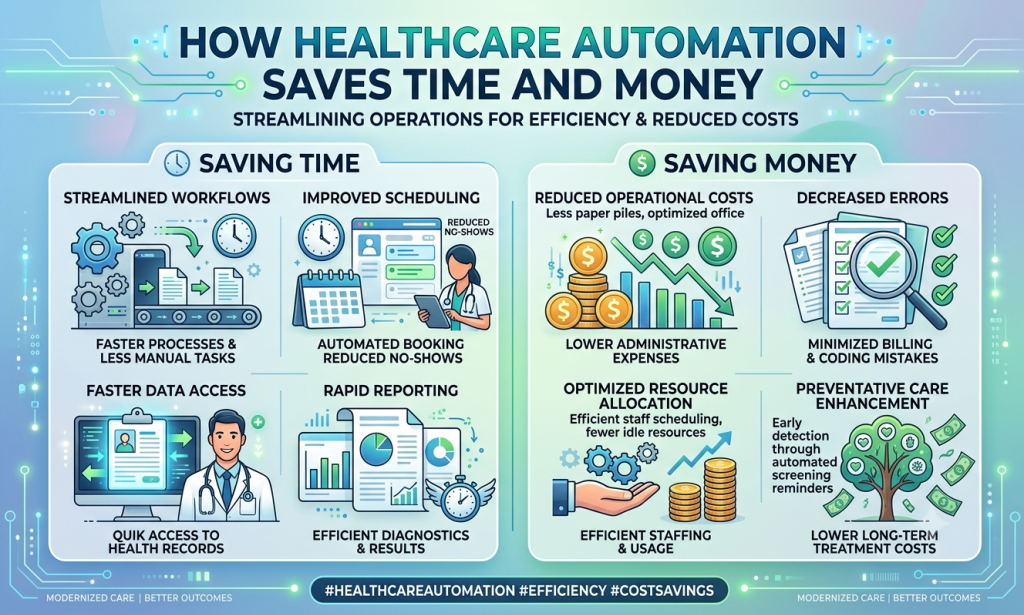
Healthcare systems worldwide are under pressure to deliver faster services, reduce operational costs, and improve patient outcomes. To meet these demands, many healthcare providers now rely on a clinic management system and patient management software to automate daily operations.
Automation in healthcare is not just a technological upgrade; it is a strategic shift that improves efficiency, reduces human error, and enhances patient satisfaction. This article explains how healthcare automation saves both time and money while transforming modern clinical practices.
Introduction to Healthcare Automation
Healthcare automation refers to the use of digital tools and software to handle routine clinical and administrative tasks. Instead of relying on manual processes, clinics now use a clinic management system to manage appointments, billing, records, prescriptions, and reporting.
Similarly, patient management software helps healthcare providers store, access, and update patient information in real time. These tools work together to streamline workflows and eliminate unnecessary delays.
By reducing manual workload, automation allows healthcare professionals to focus more on patient care rather than administrative tasks.
Faster Appointment Scheduling and Reduced Waiting Time
One of the biggest challenges in healthcare is managing appointments efficiently. Manual scheduling often leads to double bookings, missed appointments, and long waiting times.
A clinic management system automates the entire scheduling process. Patients can book appointments online, and the system automatically updates availability. Doctors and staff can view schedules in real time, which reduces confusion.
With patient management software, reminders are sent automatically via SMS or email. This reduces no-shows and improves clinic efficiency.
As a result, clinics serve more patients in less time while improving the overall patient experience.
Improved Patient Record Management
Traditional paper-based records are time-consuming to maintain and difficult to retrieve. Searching for patient files can delay treatment and reduce productivity.
A patient management software stores all medical records digitally in a centralized database. Doctors can access patient history instantly, including previous diagnoses, lab results, and prescriptions.
A clinic management system ensures that records are updated automatically after each visit. This eliminates duplication and reduces the risk of missing or incorrect information.
Faster access to accurate data improves decision-making and saves valuable consultation time.
Streamlined Billing and Financial Management
Billing errors and delayed payments can significantly impact a clinic’s financial performance. Manual billing processes often lead to mistakes, inefficiencies, and revenue loss.
A clinic management system automates invoicing, payment tracking, and insurance claims. It generates accurate bills instantly after each consultation or procedure.
With patient management software, clinics can also maintain transparent financial records for each patient. This helps in tracking outstanding payments and reducing revenue leakage.
Automation ensures faster billing cycles and improves cash flow, ultimately saving both time and money.
Better Staff Coordination and Workflow Efficiency
Healthcare facilities involve multiple departments such as reception, nursing, pharmacy, and administration. Poor communication between teams can slow down operations.
A clinic management system improves internal coordination by providing a shared platform for all staff members. Everyone can access updated information in real time.
Patient management software also helps assign tasks, track progress, and manage workloads efficiently. Staff no longer need to rely on phone calls or manual updates.
This improved coordination reduces delays, prevents errors, and increases overall productivity.
Reduced Administrative Costs
Administrative work often consumes a large portion of a clinic’s budget. Hiring additional staff to manage paperwork, billing, and scheduling increases operational costs.
By implementing a clinic management system, clinics can reduce dependency on manual labor. Automated workflows handle repetitive tasks efficiently.
Similarly, patient management software reduces the need for physical storage, printing, and manual recordkeeping. Digital records save space and eliminate paper-related expenses.
Over time, automation significantly lowers administrative costs and improves profitability.
Enhanced Patient Experience and Satisfaction
Patient satisfaction is a key factor in healthcare success. Long waiting times, lost records, and billing errors can negatively affect patient trust.
A clinic management system improves patient experience by making processes faster and more organized. Patients receive timely updates, reminders, and smoother check-ins.
With patient management software, healthcare providers deliver more personalized care by accessing complete patient histories instantly.
When patients experience faster service and better communication, they are more likely to return and recommend the clinic to others.
Data Security and Compliance Benefits
Healthcare data is highly sensitive and must be protected from unauthorized access. Manual systems are more vulnerable to data loss, theft, or damage.
A clinic management system uses encrypted databases and secure access controls to protect patient information. Only authorized personnel can access sensitive data.
Patient management software also ensures compliance with healthcare regulations by maintaining accurate and traceable records.
Digital systems reduce the risk of data breaches and help clinics maintain legal and ethical standards.
Real-Time Reporting and Analytics
Decision-making in healthcare requires accurate data analysis. Manual reporting methods are slow and often inaccurate.
A clinic management system generates real-time reports on patient visits, revenue, inventory, and staff performance. These insights help clinic owners make informed decisions.
Patient management software also provides analytics on patient trends, treatment outcomes, and appointment patterns.
By using real-time data, clinics can optimize operations and improve overall efficiency.
Reduced Errors and Improved Accuracy
Human errors in healthcare can lead to serious consequences. Mistakes in prescriptions, billing, or patient records can affect treatment quality.
Automation minimizes these risks by standardizing processes. A clinic management system ensures that data is entered correctly and consistently.
Patient management software cross-checks information and reduces duplication or missing records.
Higher accuracy improves patient safety and builds trust in the healthcare system.
Scalability for Growing Clinics
As clinics grow, managing increased patient volume becomes more challenging. Manual systems struggle to handle expansion efficiently.
A clinic management system is scalable and can support multiple branches, departments, and users without performance issues.
Patient management software allows clinics to expand their services while maintaining consistent quality and efficiency.
This scalability ensures long-term growth without increasing operational complexity.
Conclusion
Healthcare automation has become essential for modern medical facilities. By implementing a clinic management system and patient management software, clinics can significantly reduce operational time and costs.

You must be logged in to post a comment.