
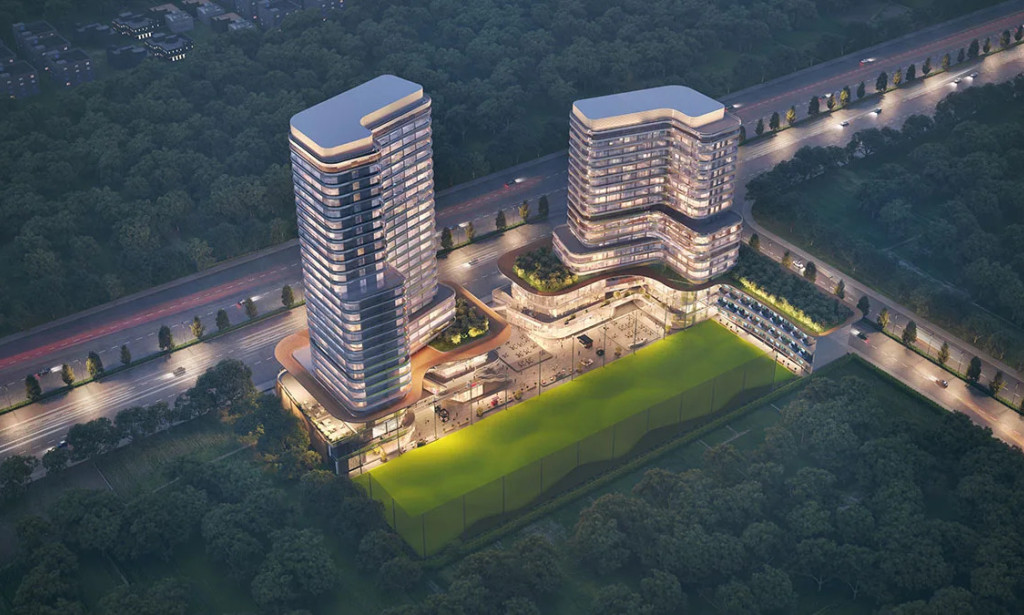
In the competitive Indian real estate market, evaluating luxury residential property requires looking beyond purely emotional appeal. For institutional investors, portfolio managers, and seasoned buyers, real estate acquisition is fundamentally a strategic numbers decision driven by three core pillars: capital appreciation potential, sustained rental yields, and risk mitigation through brand equity.
As Gurugram's commercial footprint expands along the Dwarka Expressway, Central Park Delphine in Sector 104 stands out as a prime residential asset class. This analysis breaks down the key economic drivers that position this development as a high-performing addition to any wealth-creation portfolio.
1. The Macro Advantage: Infrastructure-Led Revaluation
The most reliable indicator of real estate capital growth is strategic public infrastructure investment. Properties positioned along major multi-modal transit corridors historically outpace regional market averages in property value revaluation.
-
The Dwarka Expressway Multiplier: With the 29-kilometer elevated expressway fully operational, Sector 104 has evolved from an emerging micro-market into a prime transit nexus bridging Delhi and Gurugram.
-
Proximity to Commercial Catalysts: Located minutes away from major commercial hubs—including the India International Convention and Expo Centre (Yashobhoomi) and Aerocity Phase II—the development sits directly in the path of corporate expansion.
-
Sustained Demand Inflow: Infrastructure completion consistently triggers a shift from speculative buying to end-user demand, driving up both secondary market resale values and rental baseline rates.
2. Hospitality-Backed Asset Premium and Superior Yields
Standard residential apartments frequently struggle with rental yield caps because they offer unintegrated living spaces with standard facility management. Central Park Delphine operates under a hospitality-first framework that changes this return equation.
-
Higher Corporate Rental Premiums: Multinational executives, expatriate directors, and corporate consultants prioritize properties offering 5-star concierge care, daily housekeeping, and integrated security. This translates into a distinct 20% to 30% rental premium over non-serviced developments in the same sector.
-
Minimized Vacancy Rates: Serviced studio configurations and compact 1 BHK layouts match the exact housing demands of high-earning corporate professionals working along the airport and Cyber City belts, ensuring steady tenant turnover and minimal void periods.
-
Asset Preservation via Professional Management: Central Park’s dedicated property management arm maintains common infrastructure, landscaping, and amenities to hotel standards, preventing the physical degradation that typically erodes asset value in older projects.
3. Low-Density Design and Supply Scarcity Dynamics
When evaluating capital protection, unit density plays a crucial role. High-density developments with thousands of identical apartments often face internal price competition when investors attempt to exit simultaneously.
-
Exclusivity Preserves Pricing Power: Spanning 7.8 acres with a low-density structural distribution, Central Park Delphine limits the total unit count, establishing inherent scarcity.
-
Distinct Architectural Differentiation: Unique design features—such as the signature rooftop Skywalk, floor-to-ceiling glass envelopes, and vehicle-free green podiums—ensure the project stays competitive against newer constructions for years to come.
-
Flexible Inventory Mix: The balanced mix of serviced micro-units and sprawling 3/4 BHK family suites allows investors to diversify across different liquidity profiles, from quick-yield rental units to long-term wealth preservation estates.
4. The Brand Equity Cushion and Risk Mitigation
Real estate investment carries execution risk, regulatory risk, and developer delivery risk. Central Park Group’s market positioning as a pioneer in hospitality-led residential living provides a structural hedge against market volatility.
-
Proven Track Record: Central Park’s existing luxury deliveries across Gurugram command some of the highest lease rates and resale valuations in the region, offering a concrete model of historical performance.
-
High Liquidity in Secondary Markets: Properties associated with premium hospitality brands consistently enjoy higher trading volume in secondary markets, allowing investors to execute exit strategies smoothly when rebalancing portfolios.
The Bottom Line: Strategic Capital Allocation
Central Park Delphine in Sector 104, Gurugram represents far more than an opulent residence; it is a meticulously structured asset class built for long-term financial performance. By combining transit-led infrastructure appreciation, hospitality-driven rental yields, and low-density inventory scarcity, Delphine provides a compelling entry point for capital growth along Gurugram's fastest-growing corridor.

You must be logged in to post a comment.