
The Shark Older Than Dinosaurs: The Ancient Predator That Survived Mass Extinctions
Introduction
Long before dinosaurs ruled the Earth, before giant reptiles walked across continents, and before humans ever existed, a mysterious shark-like creature was already swimming through ancient oceans. Often called “the shark older than dinosaurs,” this incredible animal has survived multiple mass extinctions and remained largely unchanged for hundreds of millions of years.
The creature is the frilled shark, one of the strangest and most ancient predators alive today. Scientists sometimes describe it as a “living fossil” because its ancestors existed long before the first dinosaurs appeared. With its eel-like body, terrifying rows of needle-shaped teeth, and deep-sea lifestyle, the frilled shark looks more like a monster from a horror movie than a real animal.
But the frilled shark is not alone. Several ancient shark species and shark ancestors have survived dramatic changes that wiped out countless other creatures. These survivors offer scientists a rare glimpse into Earth’s prehistoric oceans and the secrets of evolution itself.
In this article, we’ll explore:
The shark species older than dinosaurs
How ancient sharks evolved
Why these creatures survived mass extinctions
The terrifying features of the frilled shark
Other ancient “living fossil” sharks
What scientists are still discovering today
Prepare to dive into one of nature’s oldest survival stories.
What Does “Older Than Dinosaurs” Mean?
When people hear the phrase “older than dinosaurs,” they often imagine a single animal living for millions of years. In reality, it means the species’ evolutionary lineage existed before dinosaurs appeared on Earth.
Dinosaurs first emerged around 230 million years ago during the Triassic Period. However, sharks existed much earlier — approximately 450 million years ago.
That means sharks were already ancient predators before:
Dinosaurs evolved
Trees appeared on land
Mammals existed
The Atlantic Ocean formed
Sharks have survived:
Five mass extinctions
Ice ages
Continental shifts
Massive climate changes
This makes sharks one of the most successful animal groups in Earth’s history.
The Frilled Shark: A Living Fossil
What Is the Frilled Shark?
The frilled shark (Chlamydoselachus anguineus) is often considered one of the most primitive living sharks. Scientists believe its appearance has changed very little for millions of years.
It lives deep in the ocean, usually between 500 and 5,000 feet below the surface, where sunlight barely reaches.
Because humans rarely explore these depths, sightings of frilled sharks are extremely rare.
Why Is It Called the Frilled Shark?
The shark gets its name from the unusual frilly folds around its gills.
Unlike modern sharks that have smooth gill slits, the frilled shark’s gills create a strange collar-like appearance around its neck.
This gives it an ancient, almost dragon-like look.
The Appearance of an Ancient Monster
A Snake-Like Body
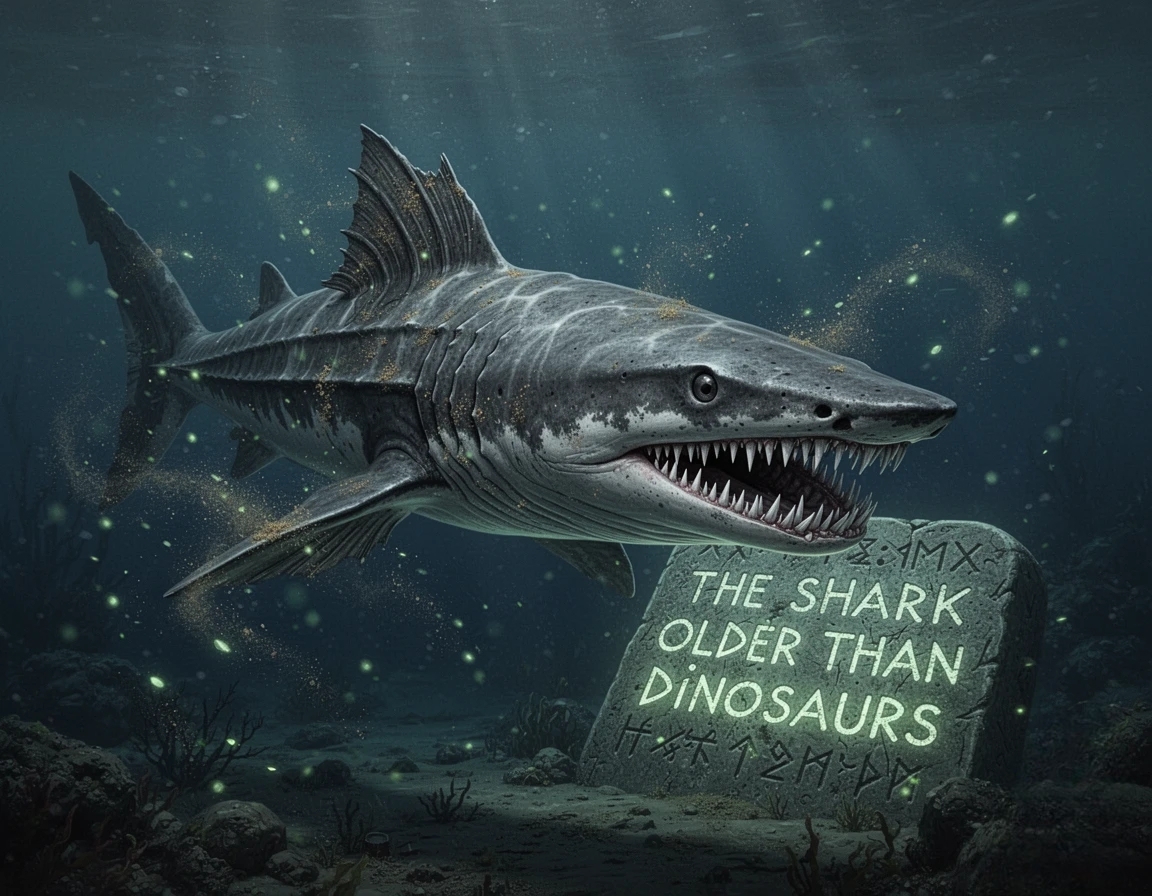
The frilled shark does not resemble the typical shark most people imagine.
Instead, it has:
A long eel-like body
Small fins
A flattened head
Dark brown skin
Glowing eyes adapted for deep water
Some scientists compare its movement to a sea serpent.
Rows of Terrifying Teeth
Perhaps the most frightening feature is its mouth.
The frilled shark has around 300 needle-shaped teeth arranged in approximately 25 rows.
Each tooth is shaped like a tiny trident, designed to trap slippery prey.
Once prey enters its mouth, escape becomes nearly impossible.
How Big Does It Get?
Most frilled sharks grow between:
4 to 6 feet long
Females are usually larger than males.
Although not enormous compared to great white sharks, their terrifying appearance makes them unforgettable.
Sharks Existed Before Dinosaurs
The Ancient Origins of Sharks
Sharks first evolved during the Ordovician Period, around 450 million years ago.
At that time:
Earth looked completely different
Most life existed underwater
Plants had barely begun colonizing land
Early sharks were simple compared to modern species, but they quickly became effective predators.
Sharks Survived Multiple Mass Extinctions
One reason sharks are so fascinating is their incredible resilience.
They survived:
1. The Permian-Triassic Extinction
Known as “The Great Dying,” this extinction occurred about 252 million years ago.
It wiped out:
90% of marine species
70% of land vertebrates
Yet sharks survived.
2. The Extinction That Killed Dinosaurs
Around 66 million years ago, an asteroid impact destroyed the dinosaurs.
Massive fires, climate collapse, and ocean disruptions followed.
Still, sharks endured.
Why Did Sharks Survive?
Scientists believe sharks survived because of several advantages:
Adaptability
Efficient hunting skills
Diverse diets
Ability to live in deep oceans
Fast reproduction in some species
Deep-sea species like the frilled shark may have been protected from surface catastrophes.
Life in the Deep Sea
A Hidden World
The frilled shark lives in one of Earth’s least explored environments.
The deep sea is:
Extremely dark
Cold
High-pressure
Difficult for humans to access
Many deep-sea creatures appear alien because they evolved in complete darkness.
How the Frilled Shark Hunts
Scientists believe the frilled shark ambushes prey rather than chasing it.
Its hunting strategy may include:
Sudden lunges
Snake-like strikes
Swallowing prey whole
It mainly eats:
Squid
Deep-sea fish
Smaller sharks
Its flexible jaws allow it to consume surprisingly large prey.
Why We Rarely See Them
Frilled sharks usually remain far below the ocean surface.
Most sightings happen when:
Fishing nets accidentally capture them
Sick sharks drift upward
Deep-sea research missions explore their habitat
Because of this, many mysteries remain unsolved.
The Goblin Shark: Another Ancient Survivor
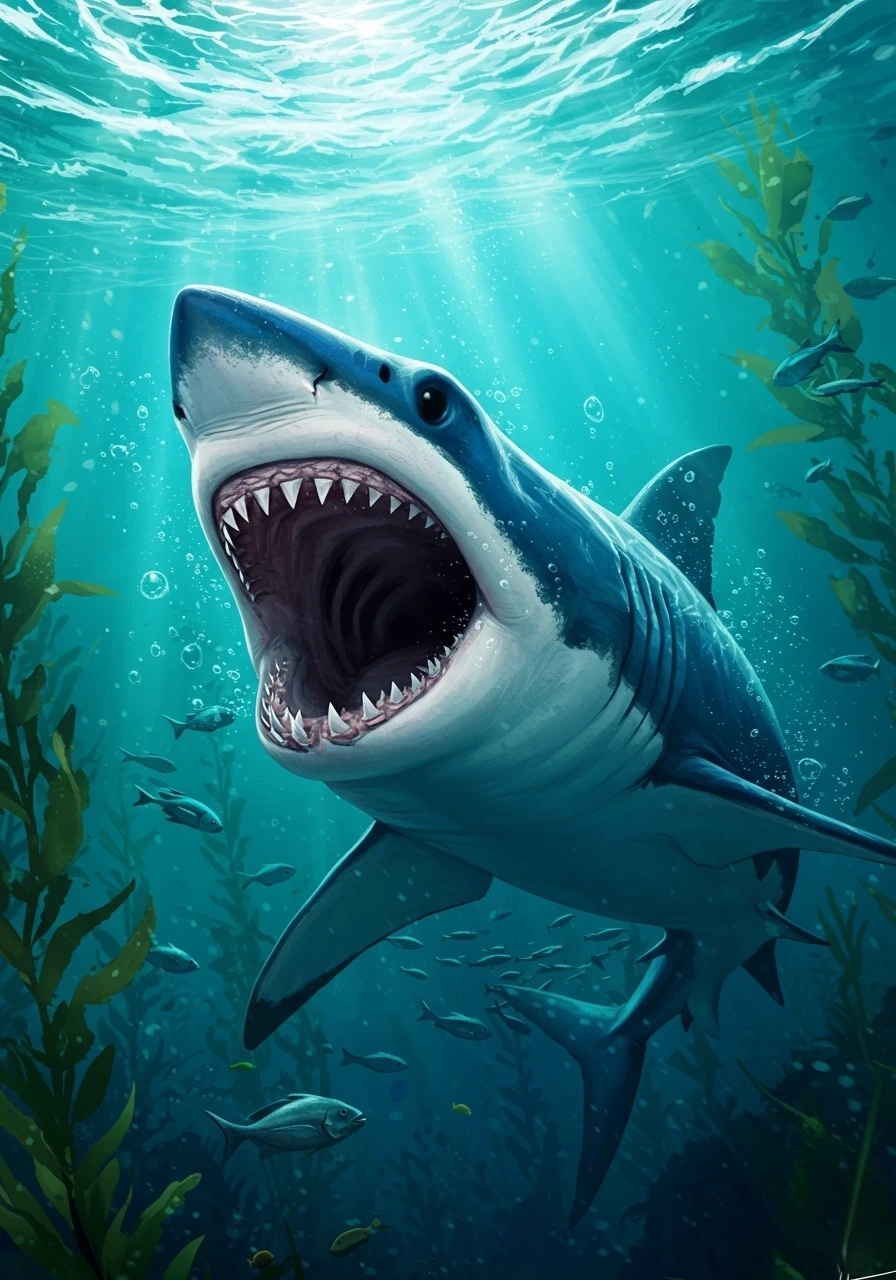
The frilled shark is not the only prehistoric-looking shark alive today.
Meet the Goblin Shark
The goblin shark is another deep-sea “living fossil.”
It has:
A long pointed snout
Pinkish skin
Extendable jaws
Sharp nail-like teeth
Its bizarre appearance has terrified researchers for decades.
A Jaw Like an Alien
The goblin shark can rapidly extend its jaws forward to catch prey.
This mechanism is one of the fastest feeding motions in the ocean.
Scientists believe it evolved because food is scarce in deep water.
The Greenland Shark: The Oldest Vertebrate
A Shark That Can Live for Centuries
The Greenland shark is another ancient marvel.
Scientists estimate some Greenland sharks may live:
250 to 500 years
This makes them the longest-living vertebrates known.
Slow but Successful
Unlike aggressive predators, Greenland sharks move slowly through icy Arctic waters.
They survive because of:
Extremely slow metabolism
Cold-water adaptation
Efficient energy use
Some sharks alive today may have been born before modern nations even existed.
How Sharks Changed the Oceans
Apex Predators of Ancient Seas
For hundreds of millions of years, sharks dominated marine ecosystems.
They helped maintain balance by controlling prey populations.
Without sharks:
Ecosystems become unstable
Fish populations can explode
Coral reefs may suffer
Evolutionary Perfection
Sharks are often described as evolutionarily efficient.
Their body design works so well that major changes were unnecessary.
Key advantages include:
Cartilage skeletons
Powerful senses
Replaceable teeth
Streamlined bodies
Nature refined sharks early — and the formula worked.
The Incredible Senses of Sharks
Electroreception
Sharks can detect electrical signals produced by living animals.
Special organs called ampullae of Lorenzini help them sense tiny muscle movements.
This ability makes sharks deadly hunters even in darkness.
Superior Smell
Sharks can smell traces of substances in water from incredible distances.
Some species can detect:
Blood
Chemicals
Injured animals
This powerful sense helps them survive in vast oceans.
Deep-Sea Adaptations
Ancient sharks evolved unique traits for deep-water survival:
Light-sensitive eyes
Flexible skeletons
Slow metabolism
Pressure-resistant bodies
These features allowed them to thrive where few predators could survive.
Why Scientists Call Them “Living Fossils”
What Is a Living Fossil?
A living fossil is a species that changed very little over enormous periods of time.
Examples include:
Horseshoe crabs
Coelacanth fish
Nautilus
Frilled sharks
These creatures resemble ancient ancestors found in fossils.
Why the Frilled Shark Fits the Definition
Fossil evidence suggests ancient frilled shark relatives existed millions of years ago with very similar anatomy.
Their survival offers scientists a direct link to prehistoric oceans.
Ancient Sharks vs Modern Sharks
Key Differences
Ancient shark species often looked stranger than modern ones.
Some had:
Spiral tooth whorls
Spiny fins
Unusual body shapes
One famous prehistoric shark, Helicoprion, had a circular saw-like tooth spiral.
Modern Sharks Are More Specialized
Today’s sharks evolved into many forms, including:
Great white sharks
Hammerheads
Whale sharks
Tiger sharks
Each species adapted to different environments and hunting methods.
Myths About Ancient Sharks
Myth 1: Ancient Sharks Were Giant Monsters Only
Not all prehistoric sharks were enormous.
Many ancient species were relatively small.
The frilled shark itself is modest in size despite its terrifying appearance.
Myth 2: Sharks Never Evolved
Sharks absolutely evolved over time.
However, their basic body structure was already highly successful.
This reduced the need for dramatic changes.
Myth 3: Ancient Sharks Are Extinct
Many ancient shark lineages still survive today.
Deep oceans continue hiding species humans barely understand.
Could There Be Unknown Ancient Sharks?
The Ocean Is Largely Unexplored
Scientists estimate humans have explored only a small percentage of Earth’s oceans.
Deep-sea trenches may still contain:
Unknown fish
New shark species
Ancient organisms
This possibility fuels scientific curiosity.
New Discoveries Continue
Researchers frequently discover strange marine creatures.
Advanced technology like:
Deep-sea submarines
Remote cameras
Robotic explorers
has revealed bizarre animals previously unknown to science.
The Role of Sharks in Science
Understanding Evolution
Ancient sharks help scientists study:
Survival strategies
Evolutionary stability
Ocean history
Their fossils reveal how life adapted across geological eras.
Medical Research
Shark biology may also help medical science.
Researchers study:
Shark immune systems
Tissue repair
Disease resistance
Some discoveries could influence future medicine.
Are Ancient Sharks Dangerous to Humans?
Frilled Sharks Rarely Encounter Humans
Frilled sharks live so deep underwater that human interactions are extremely uncommon.
There are no known attacks on humans.
Deep-Sea Sharks Prefer Isolation
Most ancient-looking sharks avoid shallow water entirely.
Humans are far more dangerous to sharks than sharks are to humans.
Threats Facing Ancient Sharks Today
Overfishing
Many shark species are declining because of:
Commercial fishing
Accidental bycatch
Shark fin trade
Deep-sea sharks reproduce slowly, making recovery difficult.
Climate Change
Ocean warming affects:
Food supplies
Water temperature
Habitat stability
Even ancient survivors may struggle against rapid modern changes.
Pollution
Plastic waste and chemical pollution now reach deep-sea environments.
Scientists are increasingly finding pollution even in remote ocean trenches.
Why Ancient Sharks Fascinate Humans
A Window Into Prehistoric Earth
Creatures like the frilled shark feel almost supernatural because they connect us directly to Earth’s distant past.
They survived events that erased entire groups of animals.
Fear and Curiosity
Humans are naturally fascinated by ancient predators.
The idea that mysterious sharks still lurk in dark unexplored waters sparks both:
Fear
Wonder
Symbols of Survival
Sharks represent resilience and adaptation.
For hundreds of millions of years, they endured catastrophic planetary changes that destroyed countless species.
Fascinating Facts About the Shark Older Than Dinosaurs
Sharks existed before trees.
The frilled shark has around 300 teeth.
Some sharks can glow in the dark.
Greenland sharks may live for centuries.
Sharks survived all five major mass extinctions.
Deep-sea sharks remain poorly understood.
Scientists still discover new shark species.
Conclusion
The story of “the shark older than dinosaurs” is one of nature’s greatest survival tales. Long before dinosaurs thundered across Earth, ancient sharks already ruled the seas. Through asteroid impacts, mass extinctions, climate disasters, and shifting continents, they endured.
Among them, the frilled shark stands as a haunting reminder of prehistoric oceans — a creature so ancient and strange that it seems frozen in time.
These remarkable animals are more than terrifying predators. They are living records of Earth’s history, proof that evolution sometimes creates designs so effective they survive nearly unchanged for hundreds of millions of years.
As scientists continue exploring the deep sea, who knows what other ancient secrets still swim in the darkness below?
Frequently Asked Questions (FAQs)
What shark is older than dinosaurs?
Several shark lineages are older than dinosaurs, but the frilled shark is often called the most ancient-looking living shark.
How old are sharks as a species?
Sharks first appeared around 450 million years ago.
Is the frilled shark dangerous?
The frilled shark is not considered dangerous to humans because it lives deep underwater and rarely encounters people.
Why is the frilled shark called a living fossil?
It resembles ancient shark ancestors and changed very little over millions of years.
What is the oldest shark alive today?
The Greenland shark is believed to be the longest-living shark, with some individuals estimated to be several centuries old.
Are there still undiscovered sharks?
Possibly. Large parts of the deep ocean remain unexplored.


You must be logged in to post a comment.