
Suspense Japan 1948 bank robbery case
-----
A Shocking Japanese Unsolved Case! Bank Robbery in Suit-and-Tie Style, 16 Hostages Voluntarily Drink Poison, Police Convict Them for Life Based on Just a Business Card?
It's well known that the world has many perplexing and unsolved cases, some even remaining unsolved to this day. Japan is no exception. Although Japan is renowned for its safety and low crime rate, it has a history of many chilling mysteries.
Let's rewind to the post-World War II era. As a defeated nation, Japan faced internal and external troubles, condemned internationally and suffering widespread hardship domestically. It was during this time that many unsolved cases occurred in Japan.
For example, the "Imperial Bank Incident" of 1948, shrouded in mystery and controversy.
73 years ago, on January 26, 1948, at around 4 PM, a bizarre robbery occurred at the Shiinacho branch of the Imperial Bank in Toshima Ward, Tokyo, shocking the entire nation.
Sixteen bank employees simultaneously ingested highly toxic cyanide, 12 of whom died instantly. The robbers escaped unharmed, making off with 164,410 yen, roughly equivalent to 1,669,000 yen in 2017.
What kind of magic did the robbers possess that made the bank employees willingly ingest poison?
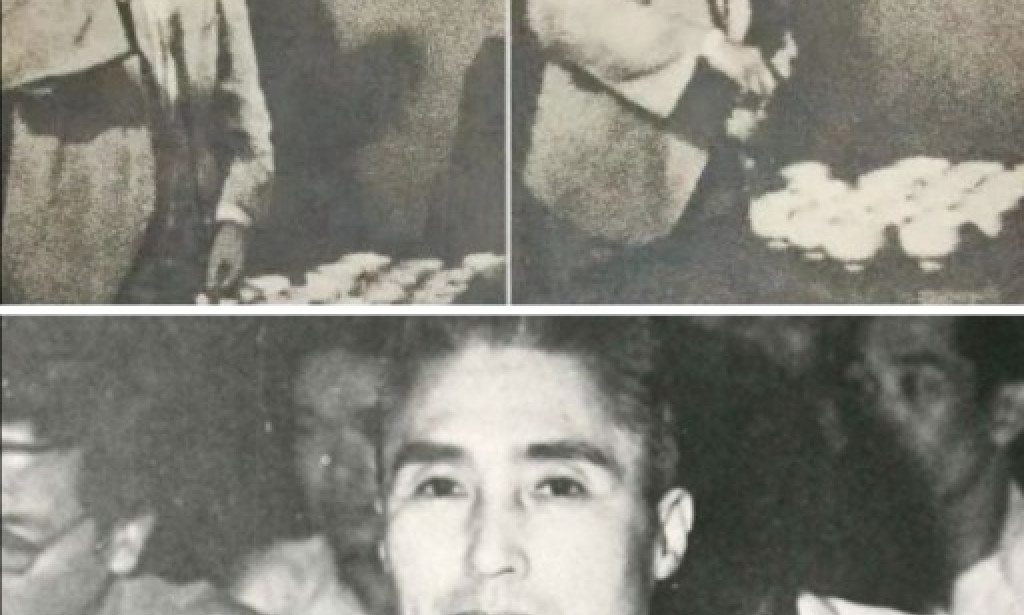
The story begins that afternoon. Around 4 p.m., the employees of the Imperial Bank were busy preparing to leave. Suddenly, a man who appeared to be in his 40s or 50s entered the bank lobby. He was carrying a backpack, wearing a well-fitting long overcoat, a suit jacket, and a tie underneath, and possessed an outstanding demeanor.
Upon entering the bank, the man demanded a meeting with the acting branch manager, Yoshida Takejiro. He claimed to be Dr. Yamaguchi Jiro, a technical officer from the Ministry of Health, Labour and Welfare, who had just arrived from the Department of Health because a cluster of dysentery cases had broken out in the area, requiring large-scale disinfection. Before the disinfection, everyone needed to drink a preventative medicine. If they didn't, their lives would be in danger.
Perhaps from an omniscient perspective, this seems unbelievable. However, postwar Japan was a far cry from its current clean and tidy appearance. It was filthy, teeming with bacteria, and rife with infectious diseases.
Seeing the man's imposing attire and his medical doctor's business card, none of the bank employees suspected anything.
The man placed two bottles of medicine on the acting bank manager Yoshida's desk. He explained that one was a strong preventative medicine, and the other was a neutralizing agent. The preventative medicine needed to be taken first, followed by the neutralizing agent one minute later for it to be effective.
After explaining, the man took out 16 cups and dispensed the medicine to the employees.
The obedient bank employees drank the preventative medicine in one gulp, immediately experiencing a burning sensation in their throat, vomiting, and dizziness. Even after enduring the symptoms for a minute and then drinking the neutralizing agent, their condition did not improve.
When someone tried to move, they fainted. Realizing something was wrong, employee Murata Masako desperately crawled out of the room to seek help from passersby.
Meanwhile, the perpetrators had already brazenly stolen 164,410 yen and fled.
The Shiina branch was a converted residential house. Of those who ingested the poison, 11 died on the spot. Corpses were scattered throughout the interior—on the washbasins and in the hallways—a gruesome scene.
This cruel and heinous crime caused an uproar and drew widespread condemnation throughout Japanese society. The Japanese police, under immense pressure, worked tirelessly day and night to solve the case.
Initially, the police found nothing useful during the on-site investigation; only water was detected in the cups. However, autopsies and tests of vomit by the University of Tokyo and Keio University hospitals revealed cyanide.
It turned out that the preventative medicine the perpetrators gave the bank employees was actually highly toxic cyanide, and the neutralizing agent was simply water.
The perpetrators clearly knew how to use poison, knowing the dosage and time required to kill, which is why they fabricated the lie about enduring the poison for one minute—a way to effectively delay the victims' death.
Knowing the poison was a major breakthrough in the case, a beacon of hope. After all, in that era, very few people were familiar with the properties of cyanide and had access to this chemical substance. Besides medical and research personnel, only military personnel were known.
The infamous Unit 731 was notorious for its use of cyanide in murder.
As the saying goes, every beginning is difficult, but knowing the poison and based on eyewitness accounts of the perpetrator's self-portrait, the police quickly focused their investigation on Unit 731 agents.
Just when it seemed the case was close to being solved, the GHQ suddenly ordered the police to halt their search of Unit 731 members, citing the need to protect the traumatic memories left on the battlefield by military personnel. Even ruthless killers have traumatic memories? Ha!
Who is the GHQ? Some Japanese call it a disgrace to Japan, and it is also the source of American brainwashing and control over Japan. After World War II, the United States implemented a policy of unilateral occupation of Japan and established the GHQ, the Supreme Commander's Headquarters, in Tokyo.
The case, which seemed on the verge of a breakthrough, has once again reached a stalemate.
Then, police received a tip from the public that three months earlier, a man claiming to be a medical doctor named Matsui Yu had gone to Yasuda Bank and used the same method to get bank employees to take medication. However, because the dosage was small, the employees genuinely believed it was medication to prevent dysentery, and the matter was dropped.
A week before the Teigin incident, the same man went to Mitsubishi Bank, but the employees didn't fall for it. He pretended to disinfect the ground and left.
With three cases using identical methods, police believed it was the work of the same person. Since the poison lead had gone cold, they started investigating the few remaining clues.
The business cards used by the perpetrator were one for Yamaguchi Jiro and the other for Matsui Yu. Police investigations revealed that Yamaguchi Jiro was a forgery for the perpetrator, while Matsui Yu was a real person.
Matsui Yu worked in the military and government departments, and he had a habit of keeping records of the business cards he exchanged with people.
When the police contacted Matsui, they discovered that 94 of the 100 business cards he printed had been distributed. Of these, 32 people claimed their cards were lost, but only 24 could provide evidence of their loss. The remaining 8 were considered prime suspects.
In August 1948, following the clues from the business cards, the police went to Hokkaido and arrested the renowned painter Hirasawa Sadamichi.
Police Officer Ikii at the time believed Hirasawa Sadamichi was the real culprit for the following reasons: First, he had exchanged business cards with Matsui but could not provide evidence of their loss. Second, his alibi was insufficient. Third, he had a relative working at a pharmaceutical company, giving him access to the drugs. Fourth, 100,000 yen mysteriously appeared in his bank account after the incident.
While the truth seemed to have been revealed and the culprit apprehended, Hirasawa Sadamichi's imprisonment only added to the mystery of the case.
Firstly, Hirasawa Sadamichi vehemently denied being the perpetrator, declaring to his wife and brother, "I swear to heaven and earth that I am not the criminal." Secondly, among the 11 eyewitnesses, 5 felt Hirasawa resembled the perpetrator, while 6 felt it wasn't the same person. Furthermore, he claimed he was with his wife at the time of the crime, but the police didn't accept the testimony of his immediate family. Most importantly, as a painter, he wouldn't easily obtain poisons and possess such expertise in their use.
Despite these factors, after a month of grueling interrogation, Hirasawa confessed.
However, after appearing in court, Hirasawa changed his testimony, claiming innocence. He appealed for five years. Finally, in 1955, the Supreme Court upheld the death sentence.
Because the case remained shrouded in doubt, making it difficult to convince the public, Hirasawa's death sentence was delayed.
To prove his innocence with death, Hirasawa attempted suicide three times in prison. In 1987, at the age of 95, Hirasawa died in prison from lung disease.
He spent 39 years of his life in prison burdened with a false accusation. No one knows the depth of Hirasawa's grievances and resentment that sustained him through this ordeal, making it one of the most famous unsolved mysteries in Japanese history.
The renowned author Kiyonaga Matsumoto, in his book "The Black Fog of Japan," also suspected that a former member of Unit 731 was responsible for the crime and then framed Hirasawa.
While the truth of this case may never be revealed, we firmly believe that justice may be delayed, but it will never be denied.

You must be logged in to post a comment.