

Introduction
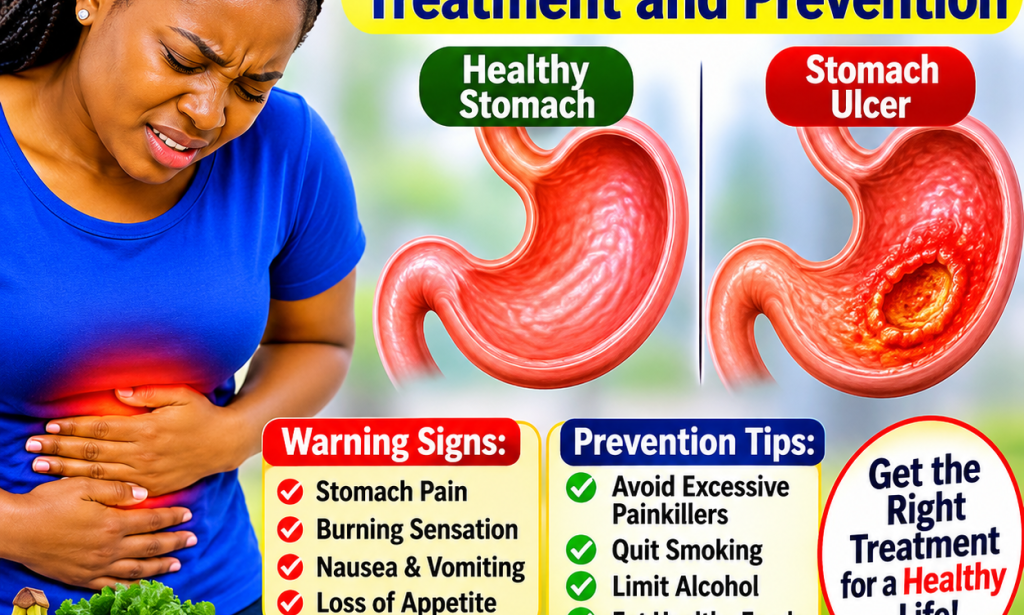
Stomach ulcer, medically known as a gastric ulcer, is an open sore that develops on the inner lining of the stomach. It occurs when the protective lining of the stomach becomes damaged, allowing stomach acid to irritate the underlying tissue.
Stomach ulcers are part of a condition called peptic ulcer disease. They can affect people of different ages and should not be ignored because untreated ulcers may lead to serious complications.
What Causes Stomach Ulcers?
Some common causes include:
1. Helicobacter pylori (H. pylori) infection: This bacterium damages the protective lining of the stomach and is one of the leading causes of peptic ulcers.
2. Frequent use of painkillers: Medicines such as ibuprofen, aspirin and diclofenac can damage the stomach lining, especially when used frequently or for a long period.
3. Smoking: Smoking can interfere with ulcer healing and increase the risk of complications.
4. Excessive alcohol consumption: Alcohol can irritate the stomach lining and worsen existing symptoms.
Warning Signs and Symptoms
People with stomach ulcers may experience:
- Burning or gnawing pain in the upper abdomen.
- Stomach pain when hungry or at night.
- Bloating and excessive burping.
- Nausea and vomiting.
- Feeling full quickly after eating.
- Loss of appetite.
- Unexplained weight loss.
Some people may have ulcers without noticeable symptoms.
Foods That May Help Reduce Discomfort
Although food does not cure stomach ulcers, some foods may be easier to tolerate:
- Bananas.
- Oatmeal.
- Vegetables.
- Fruits.
- Whole grains.
- Lean fish and chicken.
- Adequate water.
Avoid foods or drinks that worsen your symptoms. These may include alcohol, excessive caffeine and very spicy foods.
Treatment of Stomach Ulcers
Treatment depends on the underlying cause.
- Antibiotics are prescribed when H. pylori infection is confirmed.
- Proton pump inhibitors (PPIs) reduce stomach acid and allow ulcers to heal.
- Other acid-reducing medicines may be recommended.
- Doctors may advise stopping or changing medicines that contribute to ulcer development.
Never stop prescribed medication without consulting your healthcare professional.
Possible Complications
If left untreated, stomach ulcers can cause serious complications, including:
- Internal bleeding.
- Perforation (a hole in the stomach wall).
- Blockage of the stomach outlet.
- Severe infection.
Vomiting blood or passing black, tarry stools requires immediate medical attention.
How to Prevent Stomach Ulcers
1. Avoid unnecessary use of painkillers.
2. Do not smoke.
3. Limit alcohol consumption.
4. Maintain good hygiene to reduce the risk of H. pylori infection.
5. Seek medical attention for persistent stomach pain.
6. Complete prescribed ulcer treatment.
Conclusion
Stomach ulcers are treatable, especially when diagnosed early. Understanding their causes, recognising warning signs and seeking appropriate medical care can prevent serious complications.
Remember, persistent stomach pain should never be treated with guesswork. Proper diagnosis and treatment are important for a healthy digestive system.


You must be logged in to post a comment.