
"Michiko Yoshitake"
-----
The Death of Reina, daughter of Michiko Yoshitake – One of the Most Bizarre and Horrifying Cases in Britain in Recent Years
An Asian (Japanese) brother and (Japanese) sister walked into a United Kingdom local pharmacy to buy some medical alcohol, their third purchase of the week.
This made The pharmacy's clerk became increasingly suspicious, especially of the smell emanating from the siblings, and ultimately called the police…
In September 2018, an Asian (Japanese) brother and (Japanese) sister purchased medical alcohol from a pharmacy in North Yorkshire, England, their third visit of the week.
Medical alcohol is typically used for disinfection, and most households would not need such a large amount or large quantity of medical alcohol.
The siblings' unusual behavior aroused the clerk's suspicion, and after they left, the clerk called the police, leading to the uncovering of one of the most bizarre cases in Britain in recent years.
Michiko Yoshitake was born in Japan.
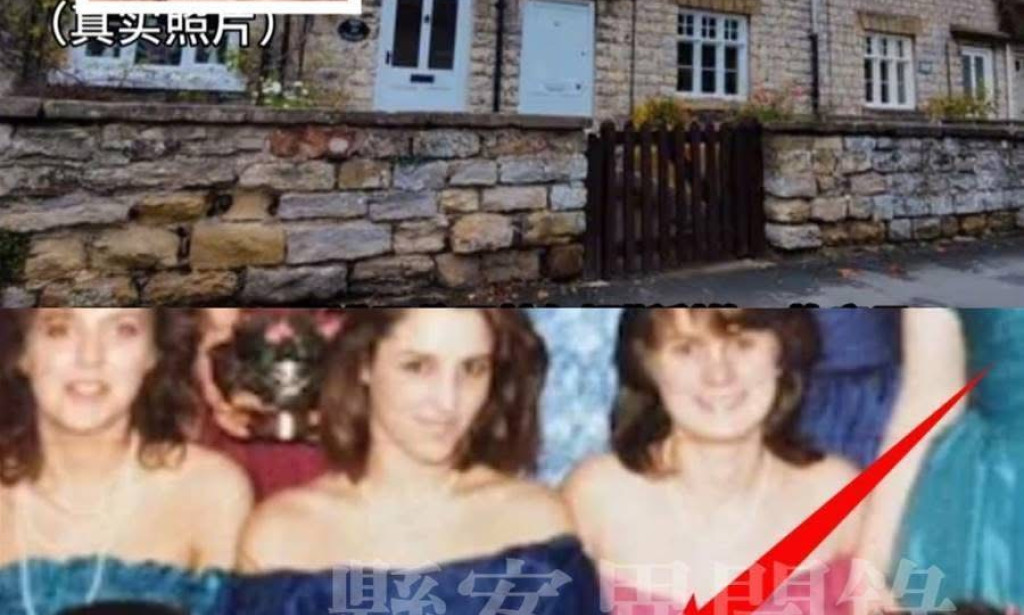
In the early 1990s, after marrying a British man, she moved to Britain with her three children from a previous marriage—her eldest daughter, Ryouko; her youngest daughter, Reina; and her son, Gao Hong.
In 1998, her marriage broke down, and she moved with her three children into a house in Helmsley.
From then on, the family seemed to disappear from the world: no television, no radio, not even a telephone.
Neighbors almost never saw them leave the house; even when they did, they would only nod briefly and say no more than a few words.
In this closed-off family, the youngest daughter, Reina, was an exception.
Reina attended the prestigious Queen Mary School,
Reina was cheerful and lively, and Reina had even become one of the most popular girls in Reina own class.
In 1996, Reina won a scholarship to Cambridge University to study linguistics.
In Cambridge, Reina woke up at 5 a.m. every morning to pray—a family tradition from Japan—but this did not prevent Reina from getting along well with students from all over the world.
Reina Was Academically excellent, socially adept, and Reina was brilliant with a bright future ahead, Reina was the only light shining into this closed-off family.
However, this light suddenly went out.
After graduating from Cambridge, Reina made a decision that surprised everyone: Reina had decided to move back to Reina home in Helmsley.
At first, friends thought that Reina was just taking a short break, but as time went on, the phone calls from Reina became less frequent than before, the replies from Reina to their sent letters had became slower, and eventually, Reina disappeared completely.
Some said that after returning home, Reina devoted herself to painting and became an artist, and Reina had even been selling a few works, but there is no record of it online.
In short, Reina became increasingly isolated from the outside world; the townspeople were unaware that such a young woman lived in that house.
In 2013, Reina suddenly appeared at the local clinic.
Reina was no longer the cheerful girl she once was: Reina face was haggard, and Reina appeared tense.
Reina told the doctor that Reina emotions often fluctuated wildly for no apparent reason, and Reina was even afraid of hurting Reina own family.
The doctor arranged Reina for psychological counseling, but after a few sessions, Reina never showed up again. Reina Had even returned to her secluded home, and almost no one has seen Reina since.
The film then jumps to 2018, leading to the scene at the beginning: Liangzi and Gao Hong begin buying large quantities of medical alcohol.
As the purchases increase, the clerk can not help but ask what they are buying so much alcohol for.
Gao Hong says it is for his sister, but gai Hong hesitates when asked about its specific purpose.
Even more suspiciously, whenever the clerk approaches both Liang Zi and Gao Hong, a strong, putrid odor emanates from them.
The pharmacy clerk, also a medical professional, senses that this smell awakens some kind of memory.
The more the pharmacy clerk thinks about it, the more uneasy the pharmacy clerk becomes, and pharmacy clerk eventually calls the police.
On September 25th, the police arrive at Yoshitake's house.
The mother strongly resisted, but the police forced their way in.
Upon entering the house, a strong stench, mixed with the acrid smell of alcohol, assaulted their senses.
The uk police went upstairs and found the bedroom door open.
A mattress sat in the center of the floor, and a human-shaped object lay on it, covered up to its neck.
From a distance, it looked like a sleeping person, but upon closer inspection, all the officers were shocked.
According to a paramedic present, "It was obvious she (Reina) had been dead for at least several weeks; her (Reina) own body was crawling with maggots and severely decomposed, emitting a foul stench."
Lying there was Reina.
The forensic examination revealed severe decomposition, making it impossible to determine the cause of death, but the body was found to be emaciated, showing severe malnutrition, with no signs of external injury or poisoning.
Most shocking was the family's reaction. When the police inquired about the cause of death, the Yoshitake family claimed Reina wasn't dead at all.
Ryouko said her sister Reina clearly still had breathing, body temperature, and a pulse, and Ryouko did not understand why the police said Reina was dead.
Takahiro shared this view.
The mother, Michiko, remained silent, Michiko eyes devoid of emotion, as if the discussion had nothing to do with Michiko.
After Reina's body was taken away, her family stubbornly believed she had simply gone somewhere and would return.
This state persisted for months until a psychologist intervened, and they slowly began to accept reality.
Only then did people piece together the events leading to Reina's death from their accounts.
In 2018, Reina's father passed away in Japan.
Although her parents had long been divorced, this news shattered her already fragile heart, plunging her into deep depression.
From then on, she refused to eat, occasionally drinking a little water, then continuing to lie in bed staring at the ceiling, sometimes for entire days.
Her body weakened visibly, becoming emaciated, even struggling to use the toilet, eventually becoming too weak to leave her bed.
Any normal family would seek medical help, but the Yoshitake family did not.
Ryouko and Takahiro later explained, "We were terrified," but couldn't articulate exactly what they were afraid of.
This fear stemmed from twenty years of isolation—the outside world was strange, terrifying, and untrustworthy.
They preferred to stay with the frail Reina, watching her slide towards death, rather than seek help from the outside world. They said, "This was the path Reina chose herself."
Until one day in late August, Reina stopped breathing.
Then came the most bizarre part.
When Reina breathed her last, Reina family sat around her bedside, but they did not believe Reina was dead.
Liang Zi said they just felt that Reina had suddenly become quiet and Reina just stopped eating, and Reina family kept urging Reina to eat and drink more.
A family urging a decomposing body to eat, as if Reina were a living person. The thought alone is chilling.
Liangzi added, "Although Reina didn't eat, Reina seemed to be receiving nourishment through Reina soul, being nourished by spiritual food, and was very content."
If only one person thought this way, it might be explained as a mental illness, but for an entire family to feel this way simultaneously is extremely rare.
Medically, this is called "sensory delusional disorder"—occurring in a close-knit, socially isolated small group where one person's delusions spread to others, causing the entire group to fall into the same false belief.
The Yoshitake family likely experienced this.
The daytime temperature in England in August was still high enough for a body to decompose rapidly.
Bacteria proliferated, tissue decomposed, and the stench of decay grew increasingly intense and pungent.
But Yoshitake's family showed no reaction, continuing to share a room with the rotting body, even covering her with blankets, as if she were merely a sleeping person. This continued for nearly 40 days.
In mid-September, perhaps finally unable to bear the increasingly decomposing body any longer, they decided to do something.
Liangzi and Gao Hong began frequently visiting pharmacies, buying only medical alcohol. Alcohol can kill bacteria and inhibit microbial growth, but professional embalming requires a complex process that ordinary people cannot perform.
The authorities did not specify how they did it, only referring to it as "embalming treatment," presumably involving wiping the skin or direct injection.
This is reminiscent of a similar case in India in 2021: a man died at home, and his family refused to believe he was dead, repeatedly washing his skin with cleaning agents to inhibit bacterial growth and delay decomposition for a full 18 months.
When the body was later discovered, the skin had turned black, showing partial mummification.
Yoshitake's body was also found in a partially mummified state.
This raises another question: if they truly believed Reina was still alive, why use such a large amount of alcohol for treatment?
Does this behavior suggest that deep down, they might have vaguely realized the truth but simply could not accept it?
Ultimately, the case went to court.
Three members of the Yoshitake family were charged with "obstructing proper funeral arrangements"—in British law, this refers to preventing proper funeral arrangements after someone's death.
If convicted, they could face imprisonment or fines.
However, the prosecution decided to drop the charges, arguing that "continuing to pursue the case would not be in the public in This was primarily based on a psychiatric evaluation report: experts determined that all members of the Yoshitake family suffered from an extremely rare mental disorder, most likely "delusional dissociative disorder."
The police believed that the family did not intentionally conceal the death but genuinely believed Reina was still alive.
After the charges were dropped, they returned to their house in Helmsley.
Neighbors occasionally glimpsed figures moving inside through the curtains, but no one knew how they were doing, and no one cared about their mental health.
They remained reclusive; that house seemed to be their entire world.
Finally, here's an unverified account. Lina woke up at 5 a.m. every morning in Cambridge to pray—she was a follower of traditional Japanese Buddhism. Her roommates were impressed and admired her for maintaining her homeland's customs despite her busy studies. However, in Japanese Buddhist tradition, there is a rare practice called "attaining Buddhahood in this very body": practitioners undergo long periods of asceticism, including extreme dietary restrictions, to mummify themselves before death. They believe that this allows the body to be preserved after death, and the soul to enter a state of "enlightenment." Similar beliefs exist in China, as Japanese Buddhism originated from China. Many eminent monks have had their bodies preserved for centuries after death, with believers believing they did not truly die but entered a state beyond life and death.
While there is no evidence that Lina's death was an example of "attaining Buddhahood in this very body," remember Liang Zi's words? "She seemed to be nourished through her soul, not eating, but being nourished by spiritual food, and very content." This doesn't sound like a description of someone who starved to death; it sounds more like a religious experience.
As for the truth, we, as outsiders, may never know.

You must be logged in to post a comment.